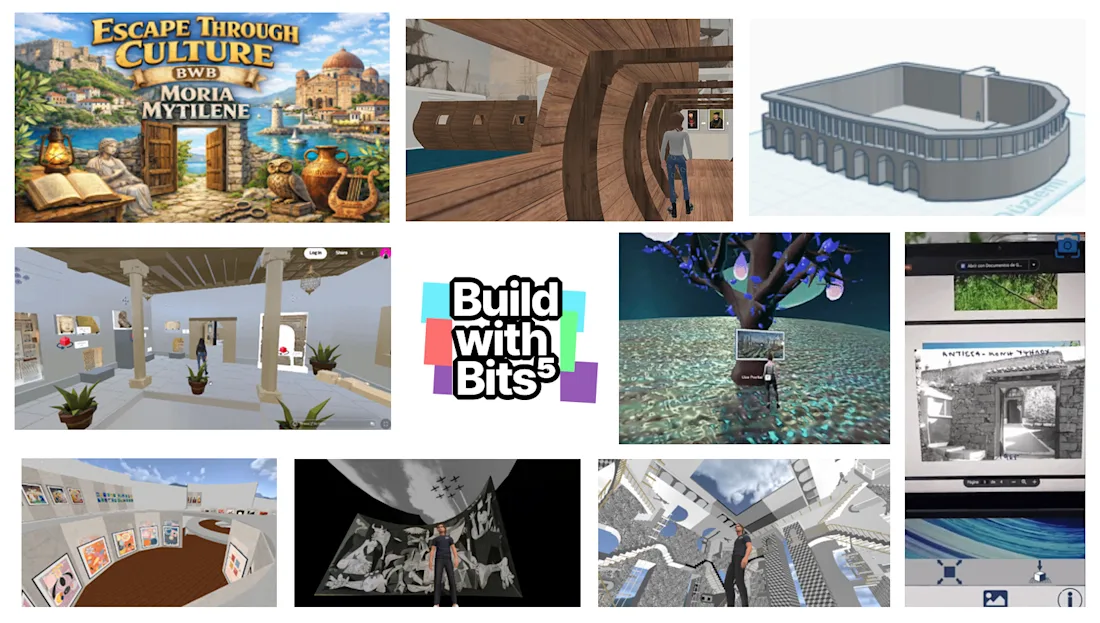
Co-organised by AIDI and the Europeana Foundation and funded by the common European data space for cultural heritage, the programme was launched during the COVID-19 pandemic as a response to the growing interest in virtual worlds and encouraged innovative engagement with Europe's 3D digital cultural heritage.
Over the course of its five editions, Build with Bits provided a platform for intergenerational and multidisciplinary experimentation, bringing together students, teachers, researchers, cultural heritage professionals and technology enthusiasts. Participants explored the creative and technical possibilities of immersive virtual environments to tell stories rooted in their local heritage while addressing contemporary social challenges.
A living lab methodology
The 12-week programme followed a living lab methodology, bringing together cultural and educational organisations with multidisciplinary teams of participants to co-create immersive virtual experiences. Institutions proposed projects rooted in their local contexts, while an open call invited participants to collaborate on developing them. Alongside hands-on experimentation with immersive technologies and accessible low-code/no-code tools, participants explored topics such as digital citizenship, ethics, critical thinking and sustainability through a series of live learning sessions. This approach encouraged participants to look beyond the technical aspects of digital creation and reflect on how technology can be used in ways that are ethical, inclusive, responsible and socially meaningful.
Since its ideation, the programme has embraced the principles of the New European Bauhaus, encouraging participants and their communities to explore how digital cultural heritage can contribute to more sustainable, inclusive and beautiful futures. The final edition focused on sustainable tourism, inviting teams to reimagine how local heritage can inspire more responsible tourism practices and create positive social impact through immersive digital experiences.
In this article, we are delighted to share the outcomes of this year's projects and celebrate the creativity, collaboration and dedication of everyone involved. From virtual museums, archaeological reconstructions and educational escape games, to augmented reality heritage trails and collaborative spaces exploring sustainable futures, participants applied digital cultural heritage in innovative ways to address local challenges. Several projects were also led by educators who have returned to Build with Bits over multiple editions, each time working with a new group of students to reimagine and further develop their ideas. This continuity has become one of the programme's greatest strengths, demonstrating how immersive technologies can support ongoing experimentation, collaboration and learning across different educational contexts.
Please note: Some of the virtual environments showcased in this article are currently accessible on Spatial. We encourage you to visit and experience them while they are still available, as access will no longer be supported from 27 July, 2026.
Build with Bits 5: the projects
Escape Through Culture
This team developed three virtual environments that explore how educators, students and collaborators can work together to co-create educational escape games. The project resulted in three interactive escape game experiences centred on the heritage of the cities of Moria and Mytilene in Greece. In this immersive adventure, players travel through five different time periods, solving challenges to restore the ‘Time Fragments’ that safeguard the cultural identity of Moria and Mytilene before they disappear forever.
Capture of Escape Through Culture, CC BY
Project leader: Monika Gavriilidou, Computer Technology Institute
Team member: Aristides Vagelatos
Educational collaborators: Moria Primary School and Mytilene Model High School
BWB collaborators: Jozhe Fonseca, Evangelia Moula, Panagiota Fabricanou, Monica Oancea, Vasiliki Psaridou, Violetta Karydaki, Myriam Lopez, Maria Antonia Brandao, Gülcan Parlamış
Student and teacher collaborators: Paraskevi Zangogianni, Vasiliki Thomaidi, Foteini Matara, Olympia Tsaroucha, Efstratios Valakos, Viktoria Pavlelli, Sapikas Odysseas, Taxeidi Ioanna, Diamantis Georgios, Morou Maritania, Chatzikyrkos Angelos, Marountselou Evelina, Myrsini Aivaliotelli, Christina-Pelagia Boka, Aimiliana Christofidi, Panagiotis Tsesmelis, Paraskevi Zangogianni, Khaled Mustafa, Digidikidis Lefteris, Antonis Karavasilis, Giorgos Kontogiannis
The Futures Forest
The Futures Forest is a collaborative virtual environment that grows through contributions from people around the world, showcasing research and creative visions of possible futures. By bringing together policymakers, researchers, educators, artists and communities, the project creates a space for dialogue, inspiration and collective reflection on the futures people want to build.
Capture of The Futures Forest virtual space, CCBY
Project leader: Freyja van den Boom
Three teams of BWB collaborators:
Good Organisation – Claire Boardman
MIRAPORDONDE (art collective) – Anna Recasens, Elena Marín, Gin Benzie, Javier Sambruno
KhNUE Team – Dr. Oleksiy Yevsyeyev and Master’s students, Maria Zuichenko, Diana Novykova
Digital Trails & Climate Resilience: A STEAM Journey Through Antissa and Vatoussa
This project connects the local history of Antissa and Vatoussa with Europeana.eu's digital collections, helping students discover the global significance of their local heritage. By combining family photographs, augmented reality and climate observation, the team created a series of digital heritage trails that encourage the community to preserve both its cultural heritage and natural environment.
Capture of Digital Trails & Climate Resilience, CCBY
Explore the project:
- Download ARTutor - Apps and Google Play (for Android) or App ARTutor4 - App Store (for iOS).
- Open it and scan this QR Code.
- Point with the camera to these images.
Project leader: Olga Vlouchaki (Greece)
Core student team: Six students from the 1st and 2nd Grades of Lyceum
Collaborating teachers: History teachers Stauros Nikokiris and Stella Vatousi, together with one ICT teacher
Local team members: Community of Vatoussa and Antissa
The First Circumnavigation of the Globe and its Music
By transforming research into an immersive virtual exhibition, this project makes historical and musical knowledge more accessible to diverse audiences. Through clear navigation and thoughtful visual design, it promotes a more inclusive cultural experience, particularly for people with disabilities.
Capture of The First Circumnavigation of the Globe and its Music virtual space, CCBY
Project leader: Elena Loreto Olmedo Pagés on behalf of IDEA Lab Research Group (Spain)
Team members: Rosario Arquero Avilés, Gonzalo Marco Cuenca
Virtual Archaeology: How to create a Realistic Virtual Archaeological Museum in Úbeda
This project created a realistic virtual archaeological museum in Úbeda by combining 3D scans of historical objects with technical documentation and contextual information from Europeana.eu. By connecting local collections with European digital cultural heritage, the project offers an engaging way to explore and preserve archaeological heritage.
Capture of How to Create a Realistic Virtual Archaeological Museum in Úbeda virtual space, CCBY
Project leader: José María Díaz Fuentes, Salesian School Santo Domingo Savio (Spain)
Institutional collaborator: Archaeological Museum in Úbeda
Echoes of the Hippodrome: A Digital Journey Through Time and Motion
This project explores the cultural and historical heart of Constantinople through an immersive digital experience. Starting from the Milion, users travel through time to the Hippodrome of Constantinople, where chariot races come to life. By blending past and present visuals, the project connects heritage, storytelling and digital creativity.
Capture of Echoes of the Hippodrome video, CCBY
Project leader: Hatice Kırmacı (Turkey)
Team members: Ata Kırmacı, Elif Kırmacı
Three museum projects in one
In this project, an educator challenged students to design three distinct virtual museum experiences, each exploring a different way of interpreting art and cultural heritage through immersive technologies. Inspired by the works of M.C. Escher, Pablo Picasso and Hilma af Klint, the students created imaginative virtual spaces that combine artistic interpretation, architecture and storytelling.
The projects include The Kaleidoscope of Gravities, a virtual museum inspired by Escher's impossible worlds; Memory and Modernity, a digital reconstruction of the Spanish Republic Pavilion from the 1937 Paris International Exposition, where Guernica was first exhibited; and Architecture for the Invisible, a virtual museum imagining the spiritual temple that Hilma af Klint envisioned for her work. Together, the three projects demonstrate how immersive technologies can reimagine museum experiences while making art and cultural heritage accessible in new and engaging ways.
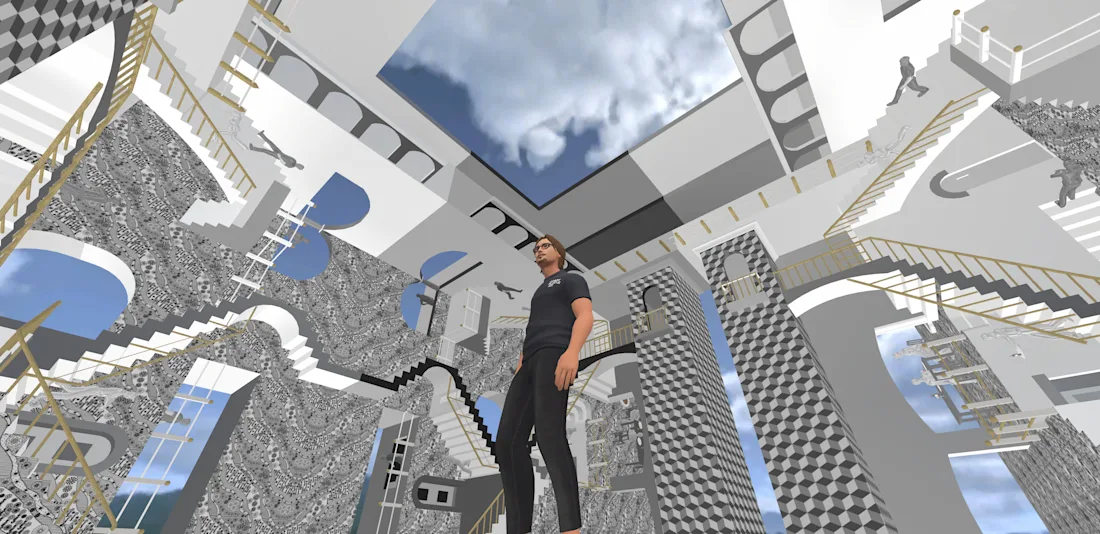
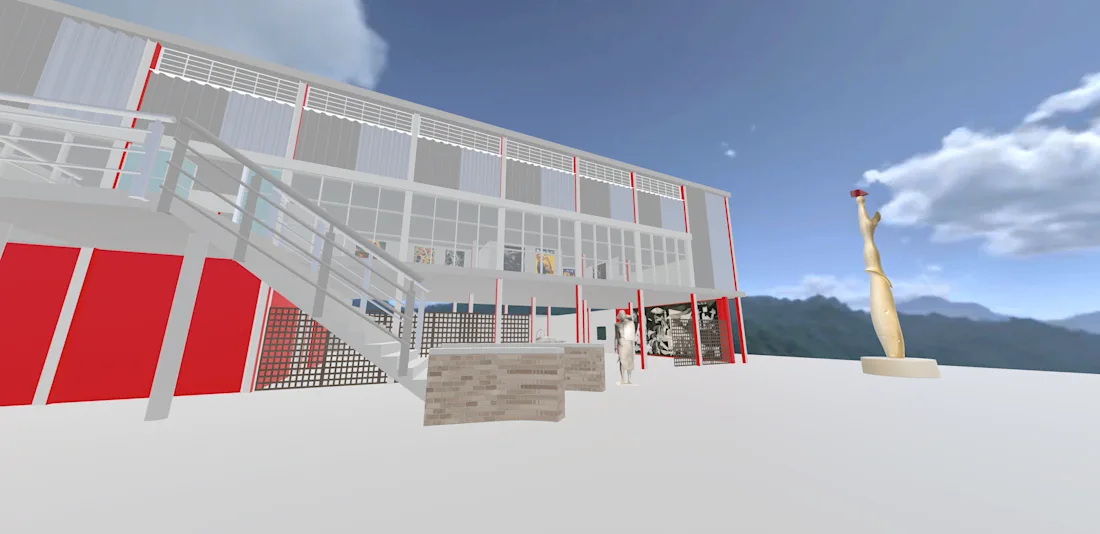
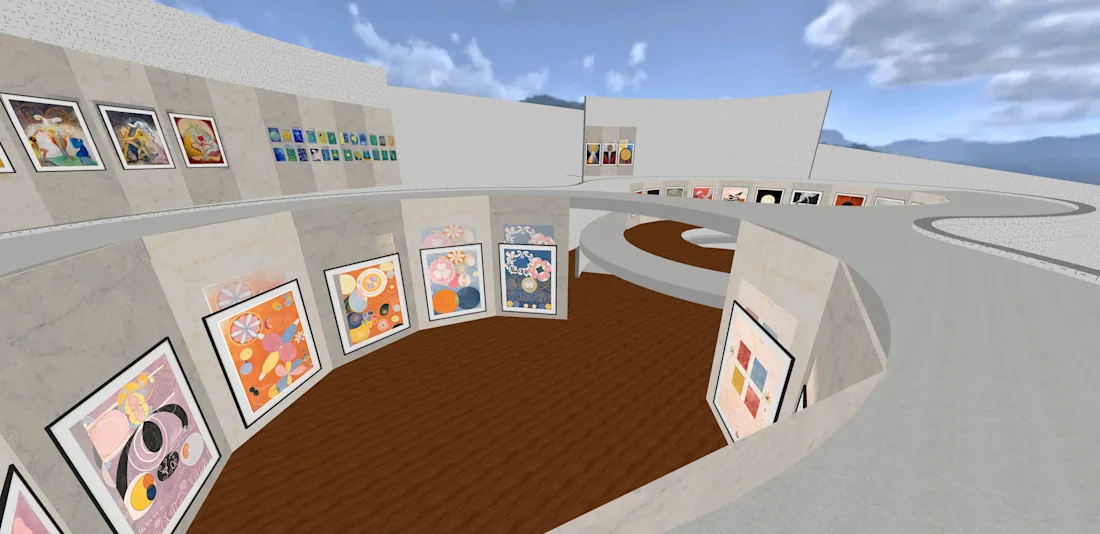
Explore the projects:
ESCHER
PICASSO
KLINT
Project leader: Francisco Sánchez López, Institut Provençana
Team members: Marta Arriaza García, Nil Corbera Natividad, Carlos Escudero García, Berta García Font, Sabrina He, Jorge Andrés Joven Serrano, Isaac Martínez García, Miguel Ángel Ortiz Gallego, Iker Puertas Arias, Elizabeth Quiroz Pazos, Jhon Wilber Saavedra Medrano, Biel Sanfeliu Gelabert, Jonathan Sausa Paco, Fakhr Eddine Tssouli Ismaili
An evolving landscape and an inspiring legacy
Over the course of its five years, Build with Bits has witnessed the rapidly evolving landscape of immersive technologies. Throughout the programme, we adapted to significant changes, from the closure of Mozilla Hubs a few years ago to the recent announcement that Spatial will discontinue its free spaces by July 2026.
These moments challenged us to explore new possibilities, including delving into different technologies and collaborating with European-based immersive platforms such as Captic and Artetra. We are particularly grateful to Artetra for working with us to preserve and continue showcasing a selection of the virtual environments created through Build with Bits, helping to ensure that participants' work remains accessible beyond the programme. These experiences have reinforced the importance of open, ethical, accessible and sustainable technologies that enable educators, cultural heritage professionals and communities to continue creating, learning and experimenting without technical or financial barriers.
This final edition demonstrated that despite current technological challenges, the interest in this type of collaborative learning experience is stronger than ever. The exceptional response to our open calls, both in terms of project proposals and collaborators, encouraged us to rethink parts of the programme to better support new participants and foster even richer multidisciplinary collaboration.
While there will not be a sixth edition of Build with Bits, we hope its legacy lives on through the people and projects it has brought together. We encourage participants, educators and cultural heritage professionals to continue experimenting with immersive technologies, building on open digital cultural heritage and exploring new ways to create meaningful learning experiences. The platforms may evolve, but the curiosity, creativity and collaborative spirit that have defined Build with Bits over the past five years will continue to inspire what comes next.