What is the Culture Chatbot Project?
A chatbot is a piece of software designed to react to digital conversation as if it were a human conversational partner. Many of you will have already come across chatbots on social media, commercial websites, or via instant messaging. For the Cultural Chatbot project, we have explored how chatbots can be used by cultural heritage institutions to engage visitors with their collections.
Exploring different chatbots
We have investigated three different types of chatbots which could be useful to cultural heritage institutions:
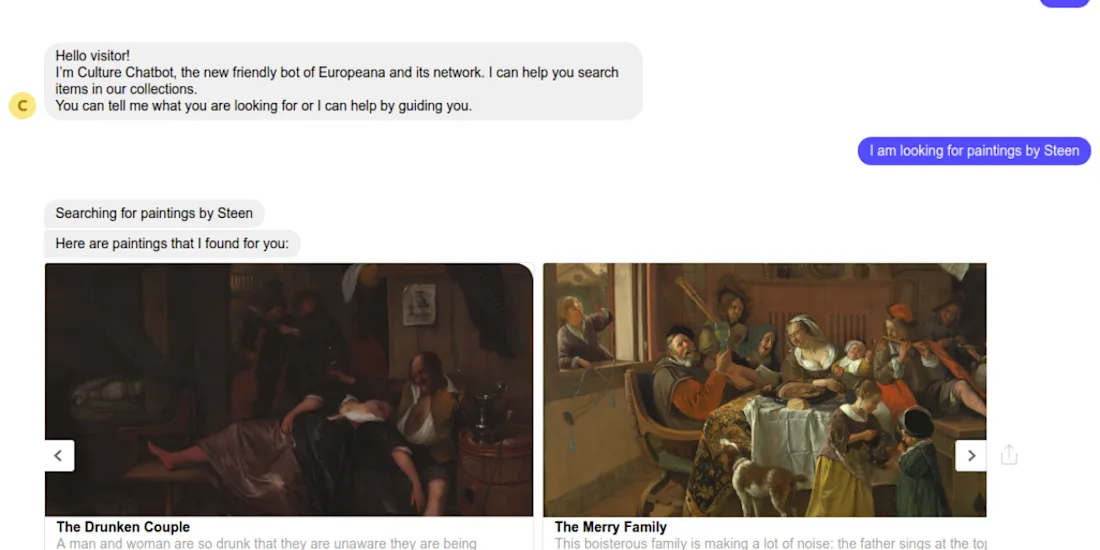
Free-text search chatbot
The free-text search chatbot expects the input of questions or keywords (for example: ‘I am looking for paintings by Rembrandt’) and then returns results based on content types (e.g. books, paintings) and named entities (creators and places) in a digital collection.
Guided search chatbot
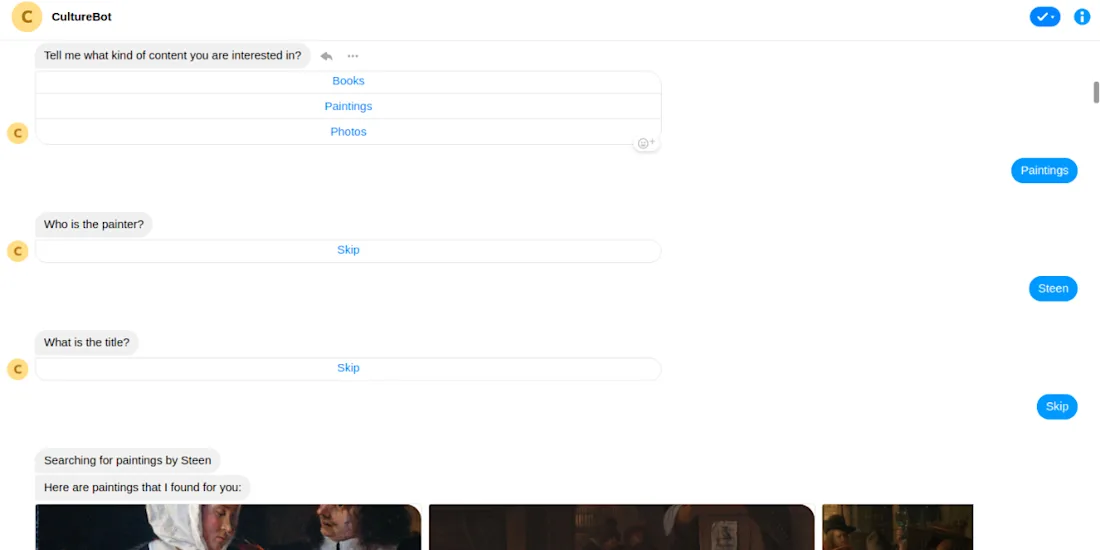
The guided search chatbot provides the user with options to interactively help them construct a query, and then provides content based on what they select.
Engagement search chatbot
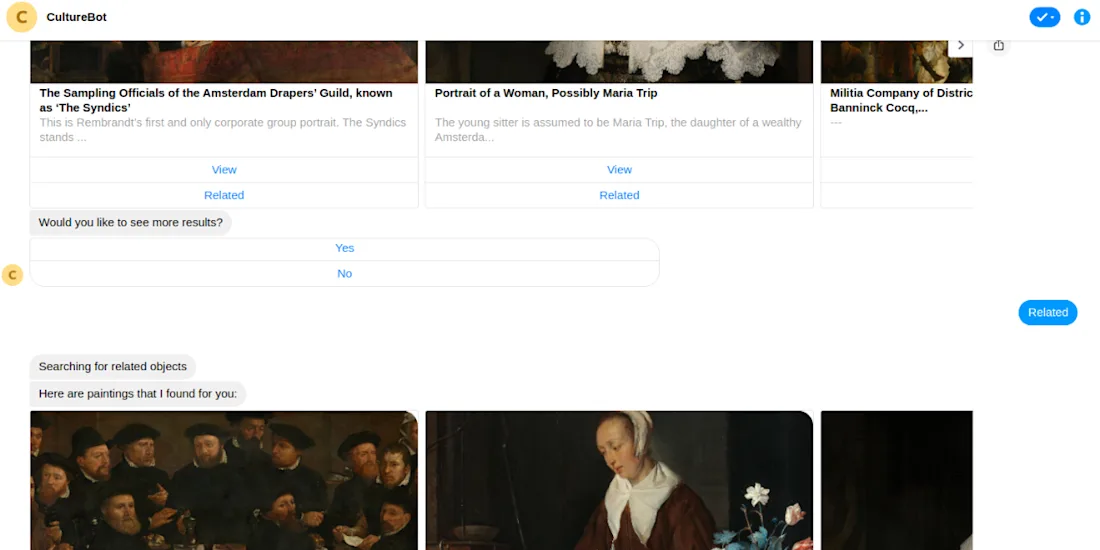
Engagement search provides a ‘more-like-that’ functionality, offering a user results that relate to their previous search, using the context of creator, place or date.
If you would like to find out more about the technical development processes behind the Culture Chatbot, you can read more about it.
The Culture Chatbot in practice
After testing these three chatbots, we started to explore how our project partners could use chatbots to highlight their own collections.
For the Museum of the History of Polish Jews (POLIN) in Warsaw, we designed a guided search chatbot for Facebook. This bilingual chatbot helps visitors to the Facebook page to locate practical information about the museum (reducing enquiries made directly to staff) and encourages them to visit it in person.
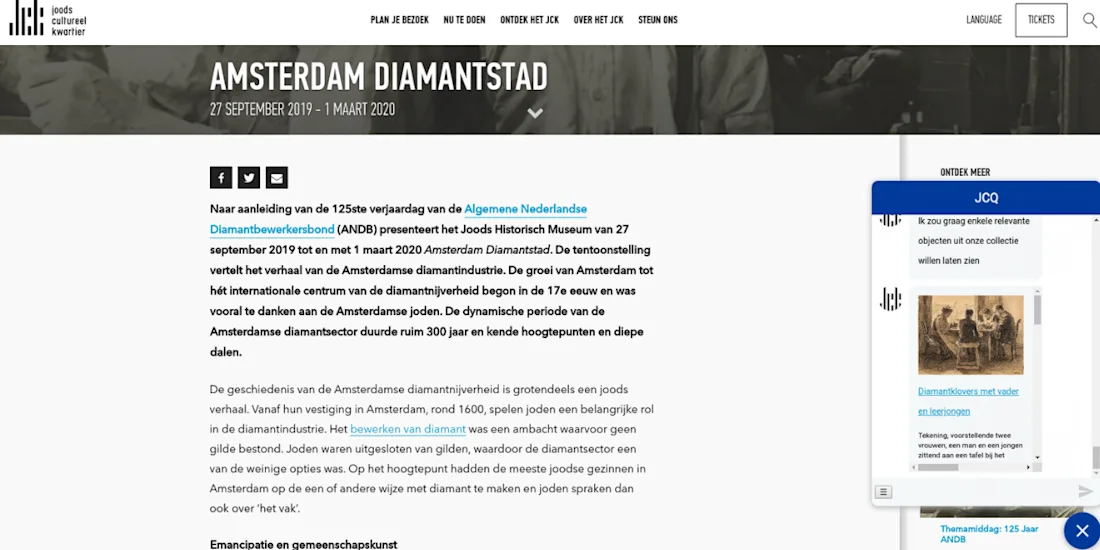
Working with the Jewish Historical Museum in Amsterdam, we designed and developed a chatbot which helps visitors explore the richness of their collections and content, as well as find out practical information about the Museum. Like the chatbot for the Museum of the History of Polish Jews, it is bilingual.
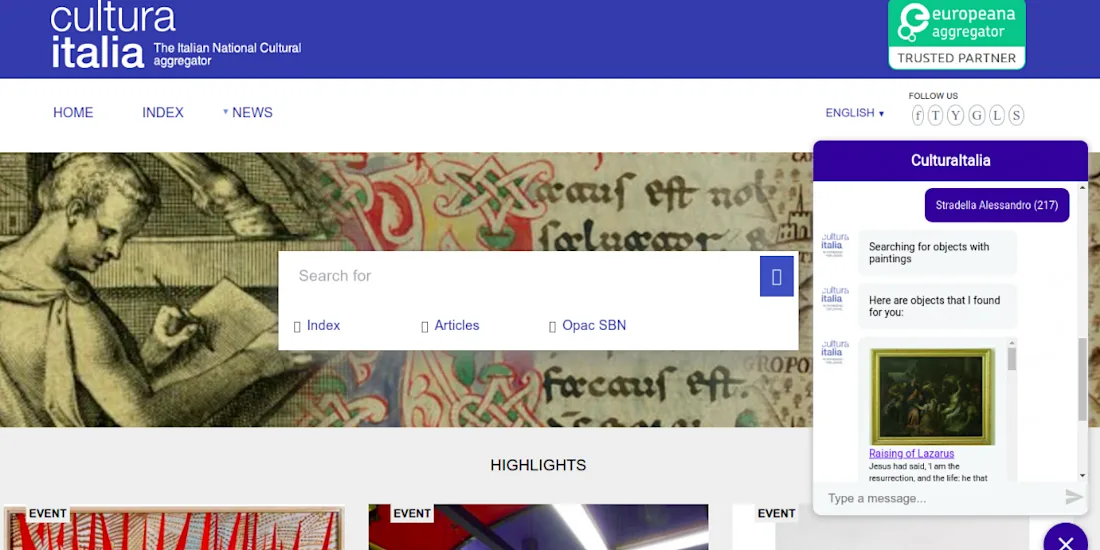
Finally, we worked with the Institute for the Union Catalogue of Italian Libraries and Bibliographic Information to develop a chatbot that would enhance the visitor experience on their collections website. This chatbot also features a guided search functionality, which is planned to be featured on the CulturaItalia homepage.
Benefit from the Culture Chatbot
Until February 2020 - when the project ends - we are offering design sprints free of charge to institutions and projects from the Europeana Network who would like to explore this exciting technology. Design sprints are intensive one or two week sessions in which we brainstorm ideas and make quick decisions to assess what kind of a chatbot would be a good match for a museum or aggregator. If your institution holds a collection of cultural heritage items, wants to engage online visitors with its content and is eager to experiment with different approaches to online engagement, get in contact!
The Culture Chatbot Project is the result of a consortium of the Jewish Historical Museum in Amsterdam, Pangeanic, POLIN Museum of the History of Polish Jews, ICCU and the Jewish Heritage Network.