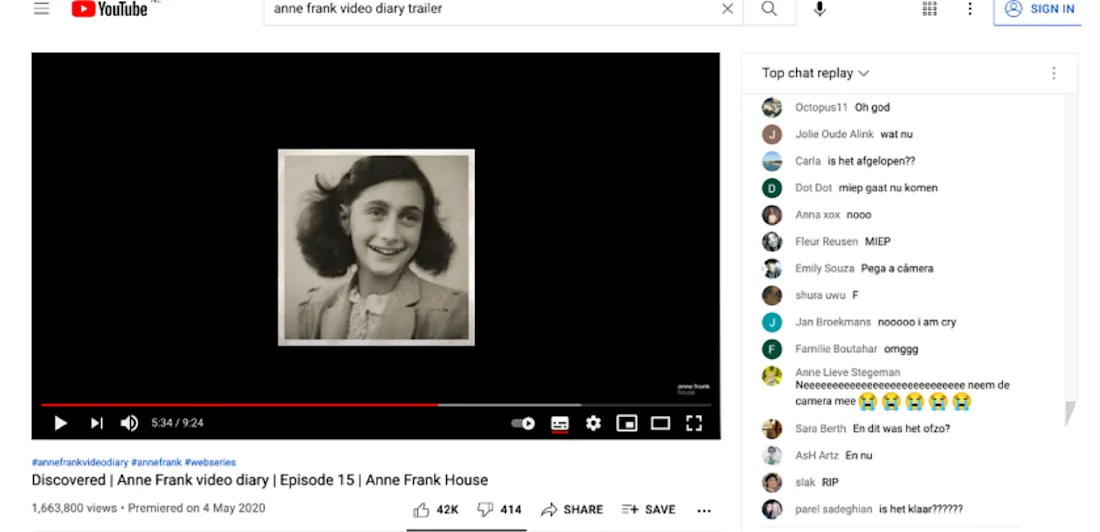
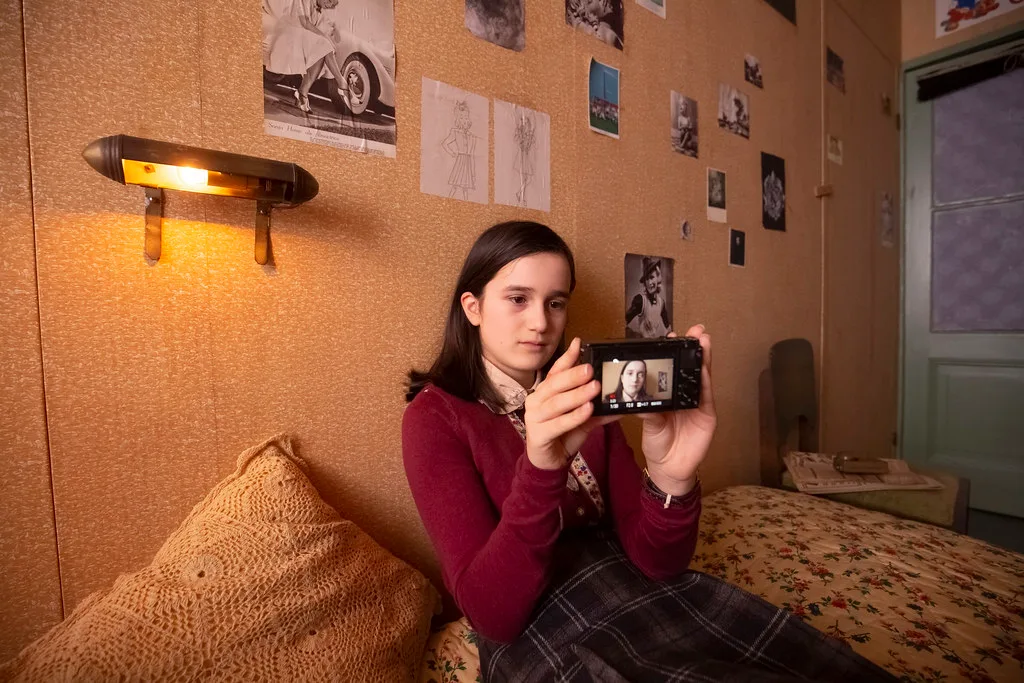
The main marketing channel was Instagram, which is also a kind of ‘natural habitat’ for the target group.
Using these channels turned out to be very effective in terms of engagement and reach with more than 11 million views for the series.
How have your audiences reacted to this project?
We were afraid of backlash as the diary is kind of an ‘institution’ in its own right, and adapting it holds a certain risk. But we were very happy to see the 99% positive reactions and comments, both in the press and amongst the viewers.
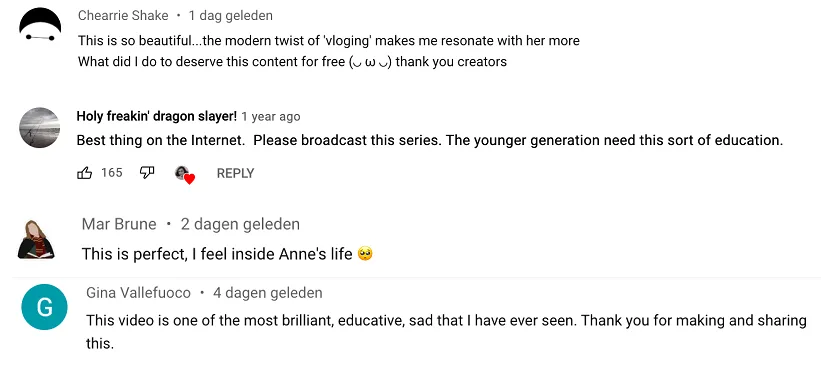
We launched the project during the first lockdown in the Netherlands. It wasn't planned that way, but it made the project even more relatable for young people than it would have been in normal circumstances. Although there is of course a big difference between a lockdown and Anne’s situation hiding from persecution, we do encourage discussions amongst youngsters on this topic, which happen in the YouTube comments.
What have you learned about working with digital cultural heritage from this project?
We have learned that modern media like YouTube and Instagram can create new points of entry for us to communicate with audiences.
The series encouraged people to visit the Anne Frank House. Shortly after the release, in the summer of 2020 more (Dutch) families were visiting the museum, many of them because kids convinced their parents to visit Anne’s hiding place.
Further afield, we saw an unexpected popularity in certain countries like Brazil and India, and think that we could expand the reach further. We used subtitles but are thinking about dubbing the series in English for a broader reach.
What difference does winning an award like this make to your project/future work?
We were surprised to win this award, since the idea of a video diary seemed so obvious. Winning really strengthened our belief that looking for new, innovative ways to tell an ‘old’ story helps to engage new audiences. This is important from a heritage, societal and historical point of view.