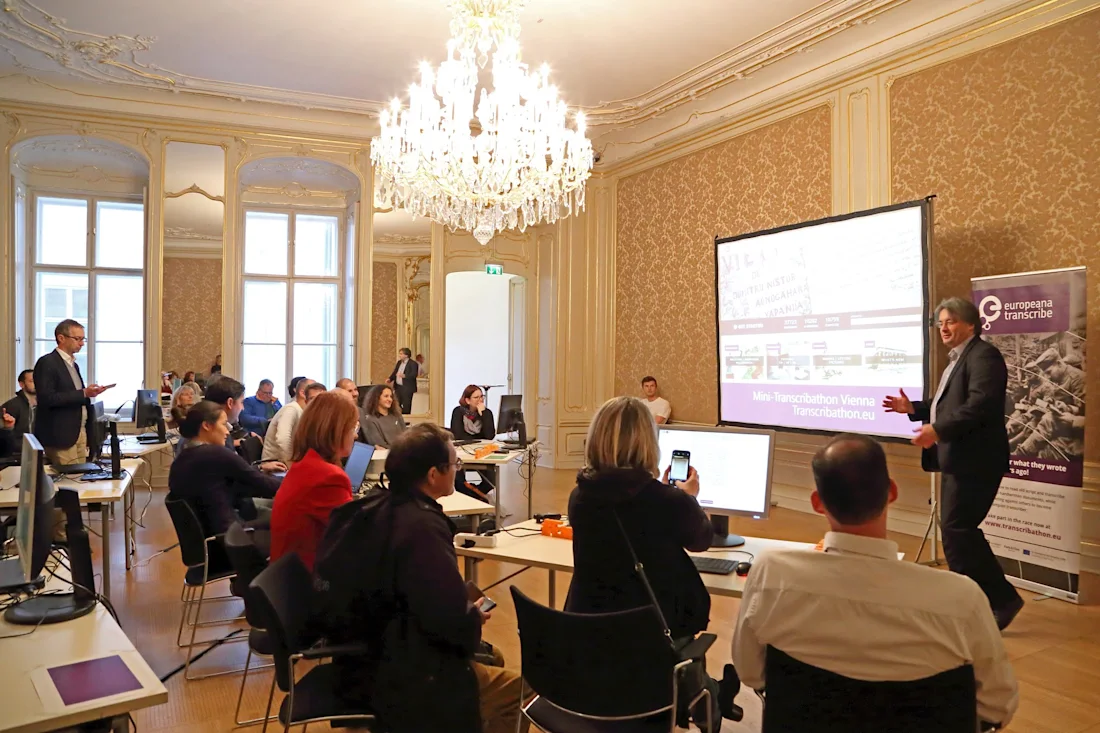
Within the scope of the Enrich Europeana project, The Austrian National Library hosted the first Mini-Transcribathon at the Palais Mollard-Clary, in cooperation with Europeana and Facts & Files. The event’s focus was to evaluate the legacy of the Year of Cultural Heritage and to encourage further commitment to Europe’s cultural heritage.
Typically, a Transcribathon lasts several days, but on 6 December 2018, we introduced a new kind of transcription competition: ‘Mini-Transcribathons’, in which each race lasts only 45 minutes. The winners were those who transcribed the most characters within the time limit.
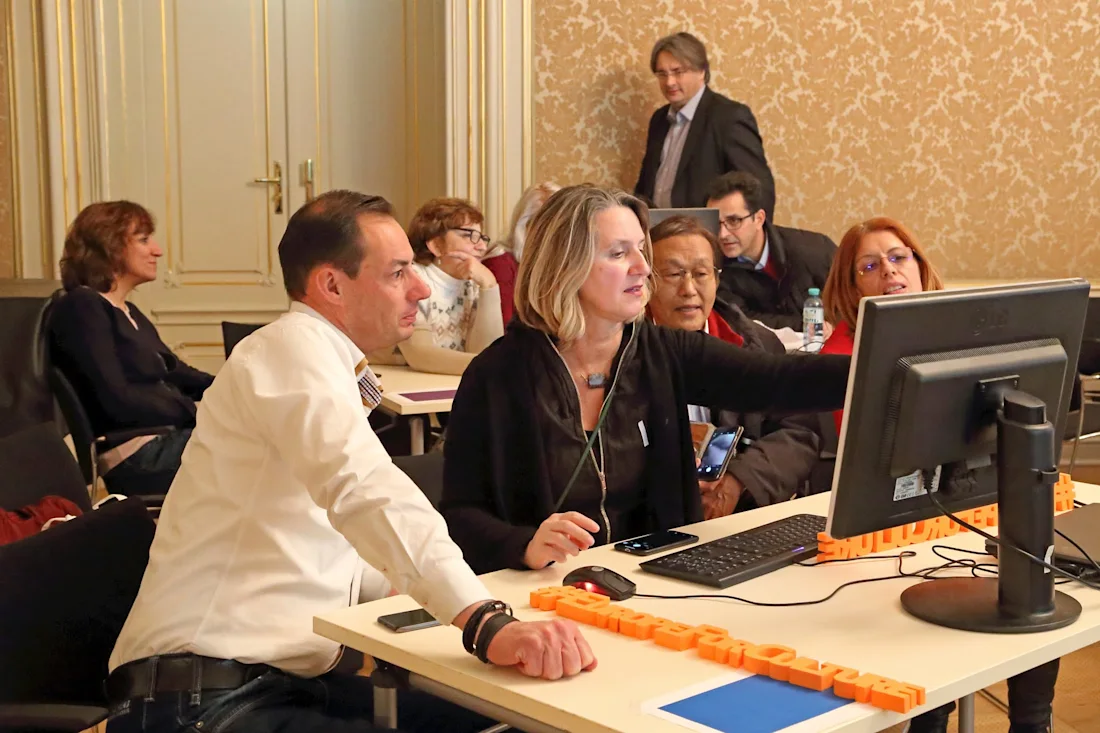
Before the competition started, the participants were divided into groups of four to six people and seated around a table with one laptop and a screen. The Mini-Transcribathons kicked off with a ten-minute introduction, through which the Enrich Europeana project and the Transcribathon concept were presented.
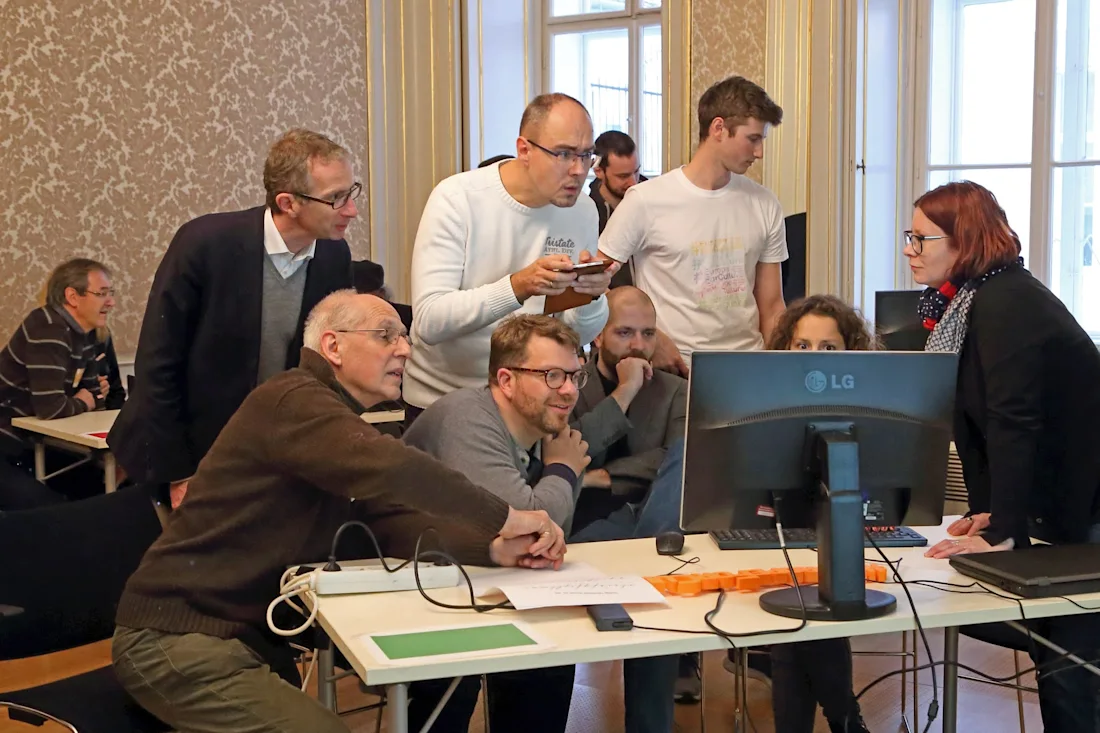
After the introduction, the competition started right away and the groups had 30 minutes to transcribe as many documents as they could. Participants had the unique opportunity to work with original letters and diaries from the time of the First World War. 90 participants from all over Europe ran against the clock and transcribed specially-selected documents written in English, German, French and Italian. As the teams were deciphering the words, the progress of each team was placed into an interactive presentation (Mentimeter) and projected onto a big screen for the audience to see the outcome.
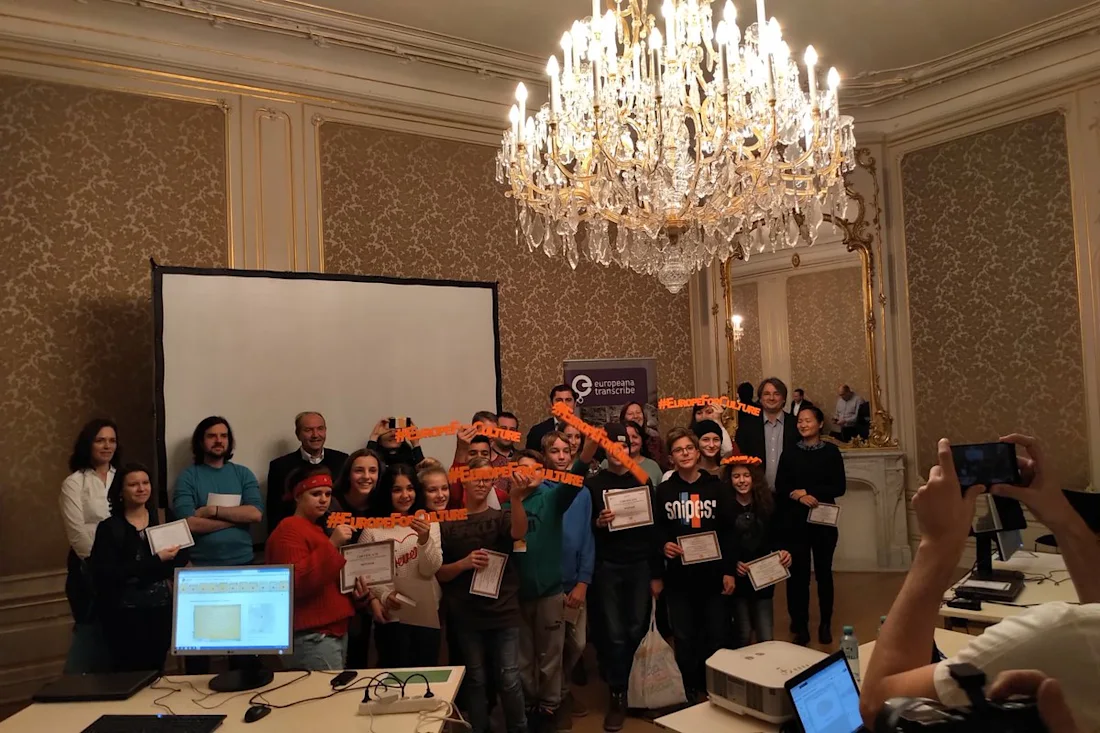
After the 30-minute transcription time, the challenge ended with a small awards ceremony, at which the overall winners of the challenge were announced. Out of the three Mini-Transcribathons, one team of enthusiastic school students became the ultimate winners, transcribing an impressive amount of 3,365 characters within such a short length of time.
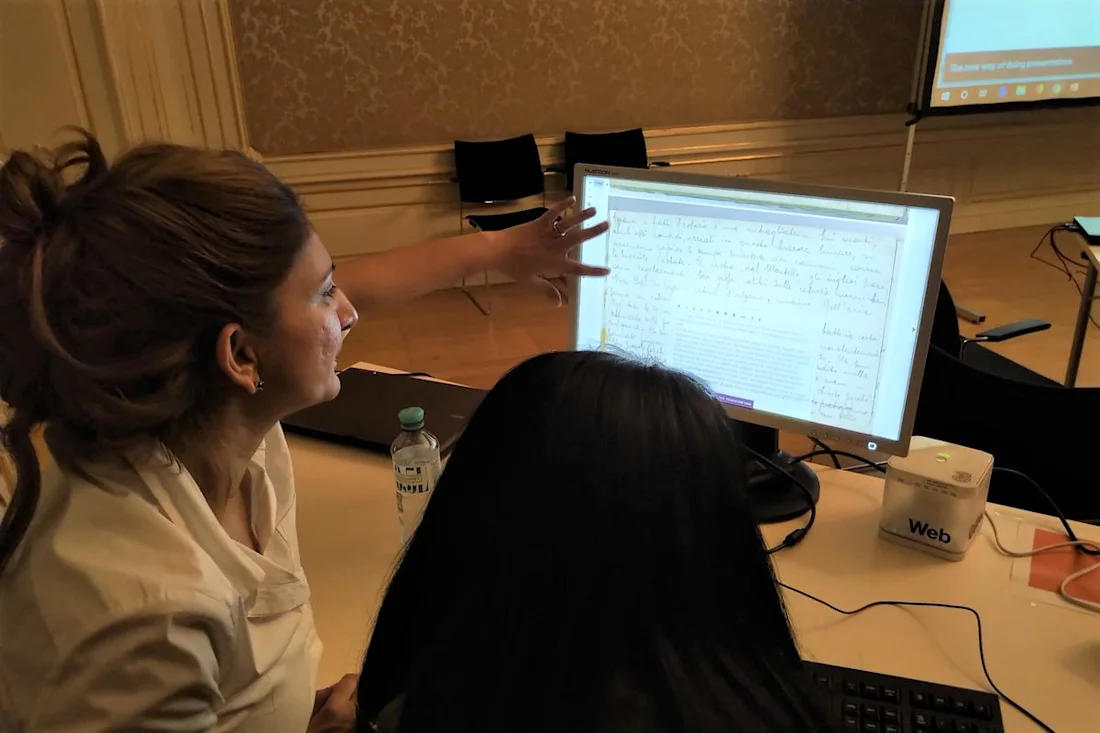
At the end of all three Mini-Transcribathons, almost 25,000 characters had been transcribed from about 50 documents. Young and old worked side-by-side in preserving important documents from WW1, making them readable, searchable and accessible for years to come. With each transcribed word, they not only uncovered long-forgotten secrets of the war but also helped to unlock this information and make it available for future research and education activities. Discover the full results of the event at www.transcribathon.eu/vienna.
Co-financed by the Connecting Europe Facility of the European Union.