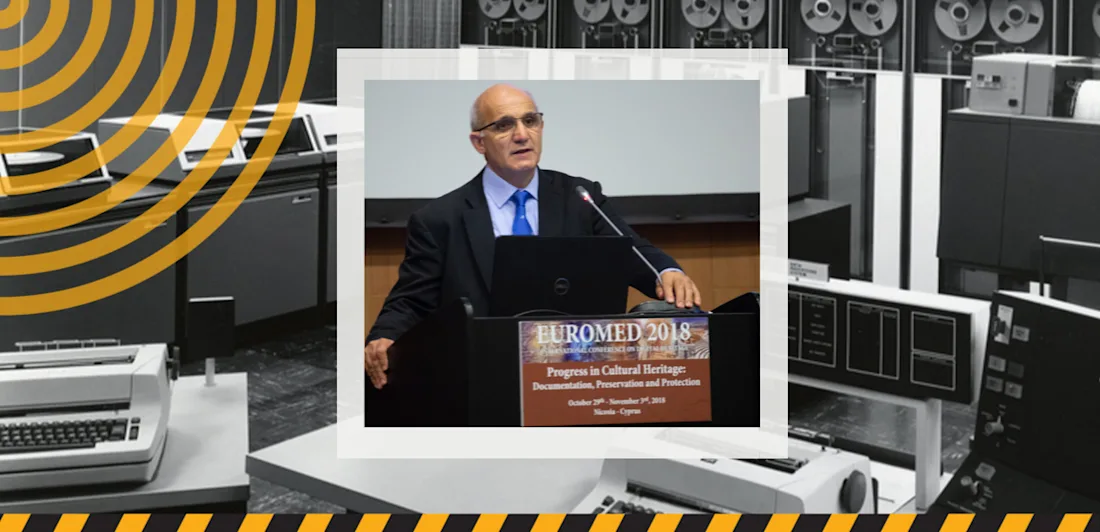
Marinos is involved in the development of innovative algorithms that can create 3D reconstructions of heritage monuments. His work goes beyond architectural design and modelling, and turns tangible blocks of stones - and their stories - into digital records. It is not an exaggeration to say that the outstanding work Marinos and his team do has the potential to rebuild Europe and its memory.
3D - it’s more than geometry
I’ve been in the cultural heritage sector since the end of the 1980s, when I first started contributing to 3D and digitisation projects during my time as a postdoctoral student in Germany.
My work focuses on the digital documentation, preservation and protection of cultural heritage - in particular architectural structures such as artefacts, monuments and sites. The greatest scientific value of our novel methodologies lies in the holistic heritage documentation of these tangible objects. We create valuable historic records of human knowledge using both geometrical data of billions of 3D point-clouds and a range of 2D and other information often hidden in storytelling, books, drawings, images, maps, and audiovisual material.
One of the greatest challenges scientists face is that there are no internationally recognised standards to holistically document tangible objects in cultural heritage. These are urgently needed. A case in point is the challenge the multidisciplinary experts from around the world are facing with the accurate 3D reconstruction of the Notre-Dame cathedral.
As part of the ViMM (Virtual MultiModal Museums) project, we contributed to the European Commission’s Declaration of cooperation on advancing digitisation of cultural heritage for Digital-Day 2019, which has been signed by 26 EU Member States. Now, we’re working with the European Commission and international organisations like UNESCO, Europeana, ICOMOS, ICOM, Europa Nostra, ICCROM, EMA, NEMO, CEN, CLARIN, DARIAH, CARARE, Photoconsortium and Michael-Plus to intensify our discussions and set a new standard of sustainable collaboration under the spirit of this Digital Day declaration.
The first 3D object in Europeana Collections
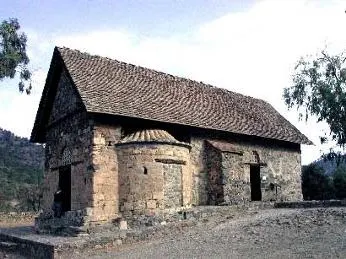
I was involved 15 years ago in the development of the first 3D object in Europeana Collections - the Church of Panagia of Asinou in Cyprus, which is a UNESCO World Heritage listed monument. Currently, this is the only existing monument completely recorded to the millimetre and available as a Heritage Building Information Model (HBIM). High-quality results like this have the potential to be used and reused by multidisciplinary groups of professionals and individuals, such as students and tourists.
The world’s first 3D project in digital heritage
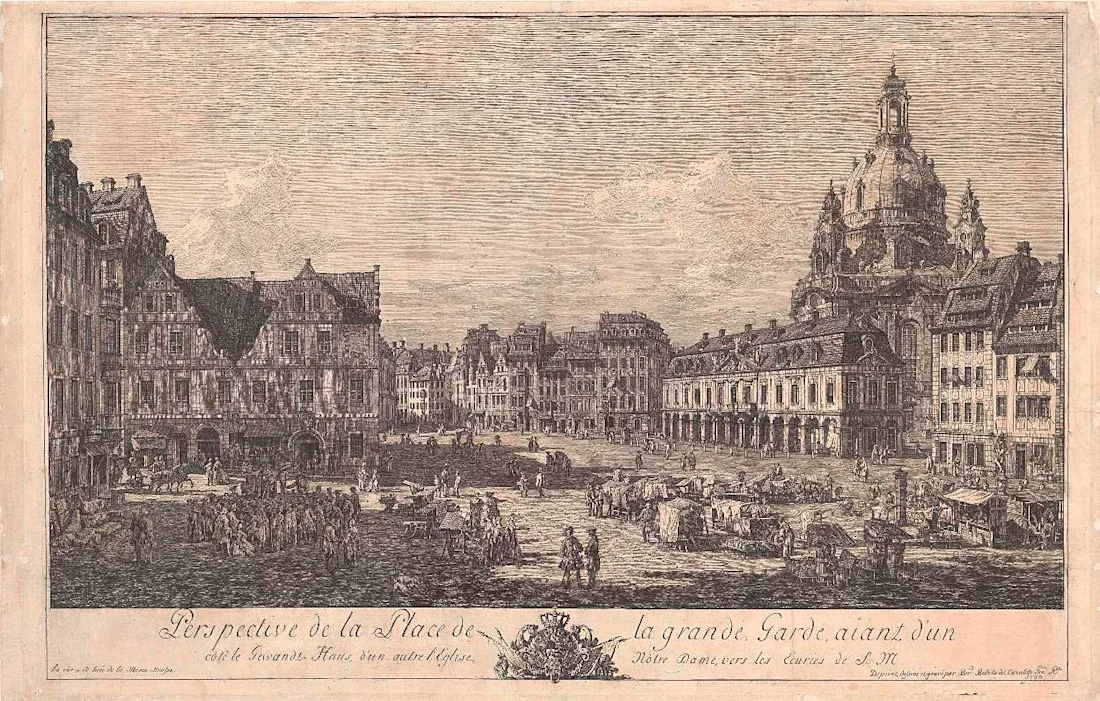
Directly after the reunification of Germany, the people of Dresden decided to reconstruct and rebuild their cathedral, the Frauenkirche, which had become a symbol of the suffering of German civilians after its destruction in World War II and then a symbol of reconciliation. However, no data such as architectural drawings were available. Everything was lost. An innovative approach was suggested and worldwide crowd-sourcing took place in order to collect information, data and knowledge about the monument - but without the internet, of course. It took place through the conventional channels of mass media.
Recreating and 3D printing at The Louvre
Back in Cyprus in 1996, to commemorate 150 years of its presence in Greece, the French Archaeological Academy of Athens supported the institute I was then working with to digitise in 3D the biggest stone pot in the world. This was the first time a research team with a 3D laser scanner had crossed the doors of the Louvre Museum in Paris. We fully digitised and replicated the Louvre’s third biggest object - a massive stone vase (from the 6th century BC - Height: ~1.90 m and Diameter: ~3.20 m; weight ~14 tons) that had decorated the entrance of the temple of Aphrodite at the top of the hill at the Acropolis in the ancient city of Amathus in Cyprus. The temple of Aphrodite was digitally reconstructed by my team and reproduced in Germany using 3D printing technologies at a scale of 1:500. For these very unique achievements, I received the 2010 Tartezos Award from the Spanish Society on Virtual Archeology.
3D data from an archaeological site to Europeana at the push of a button
With other multidisciplinary experts for the development of new standards, as well as with the industry, we are working closely with a European 3D Laser manufacturer on the automatic generation of Europeana-ready metadata from 2D information and 3D point cloud structures. This ‘plug and play’ application now in development will accelerate the harvesting of high-quality metadata and content to Europeana. Moreover, we are developing novel cloud-based computing applications for advanced digitisation in museums, archives, libraries and sites. In this way, we are removing current barriers to digital preservation and encouraging small cultural heritage stakeholders to move forward and be part of the digital era.
A sustainable career in protecting what was lost
Cultural heritage digital documentation, preservation and protection is a unique multi- and interdisciplinary sector. Thus, this newly established research area (Digital Heritage, or as we define it today: Cultural Informatics) has a distinct character to support and help define the human experience in the humanities and the social sciences.
The newly established Cyprus University of Technology has been the home of our pioneering Digital Cultural Heritage Research Lab (DHRLab) since 2013. We have received several highly competitive EU grants such as the first Marie S. Curie Initial Training Network fellowship project to train 20 PhD fellows in digital cultural heritage (ITN-DCH), for which we were awarded the best Innovation prize at the Innovators Fair on Cultural Heritage during the EU Year dedicated on Cultural Heritage in 2018. ITN-DCH was declared by the European Commission / Research Executive Agency in June 2019 as one of the five Life Changing projects in the last decade (2009-2019).
It’s clear this is an area that’s ripe for future investment; it’s encouraging and sustainable. For young people who have 40 years ahead of them in the workplace, it’s a promising field with in-demand jobs and great career opportunities, where you get so much experience and knowledge, by setting new standards and undergoing new challenges for the reconstruction of the past-story. It’s amazing each time you see the results of your work: to reconstruct, preserve and protect what was lost during the evolution of humankind.