The CRAFTED-DEMA dataset
The new CRAFTED-DEMA dataset includes a range of materials produced within the three-year research project Doing Experimental Media Archaeology (DEMA) (2019-2022), which was led by the Luxembourg Centre for Contemporary and Digital History (C2DH), University of Luxembourg. The DEMA project systematically explored the potential of doing hands-on experiments with historical media technologies in order to better understand and experience how they worked and were used in the past.
The dataset, created within the framework of the CRAFTED project and provided by the Open University of the Netherlands as partner of the CRAFTED consortium, in collaboration with C2DH, provides access to high-quality photos, videos, sound recordings, 360-degree photos and 3D objects of various analogue media objects. Read on to discover more about the objects the dataset includes and research from the DEMA project.
Home cinema and amateur film technologies
For the DEMA project, I explored early 20th century home cinema and amateur film technologies. Interested in the emergence of home cinema at the beginning of the 20th century, I conducted historical re-enactments with a Kinora viewer (ca. 1907) and Pathé Baby film projector (ca. 1924).
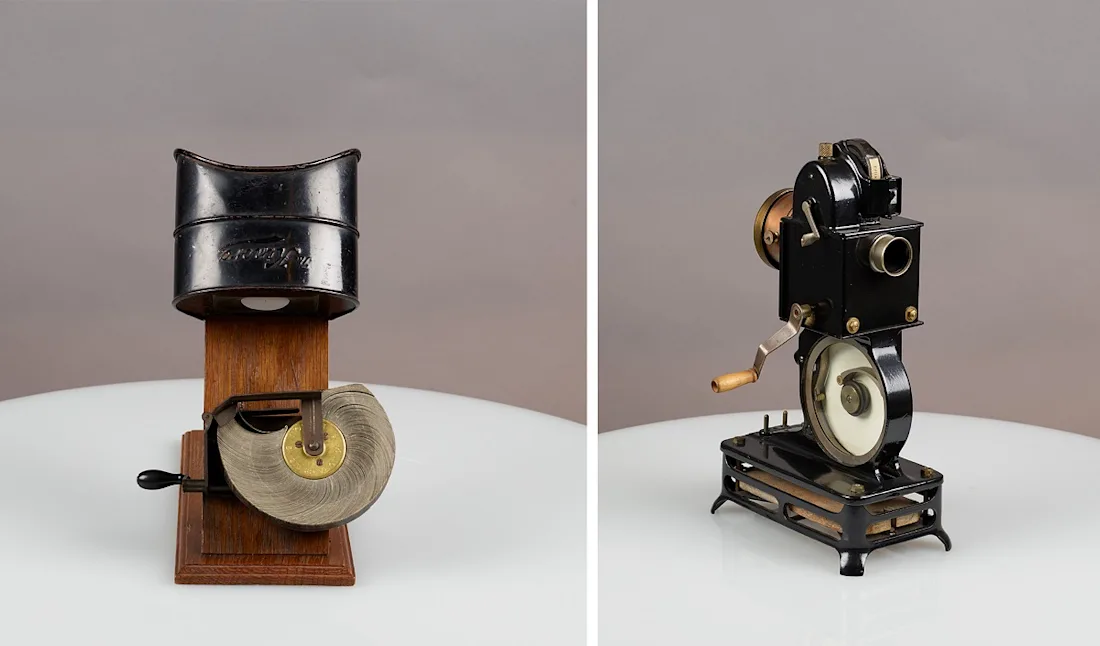
The Kinora is an individual viewing machine from the early 1900s, which makes use of a flipbook mechanism to animate a series of paper-based photographs attached on a reel. The Pathé Baby was a popular film projector introduced by the French production company Pathé Frères in 1922. Using 9.5mm films, it could screen reduction prints of cinema titles at home.
Discover these objects in the dataset and learn more about the history of home cinema and amateur film in the CRAFTED-exhibition Life in Motion: A History of Amateur Film.
Historical sound technologies
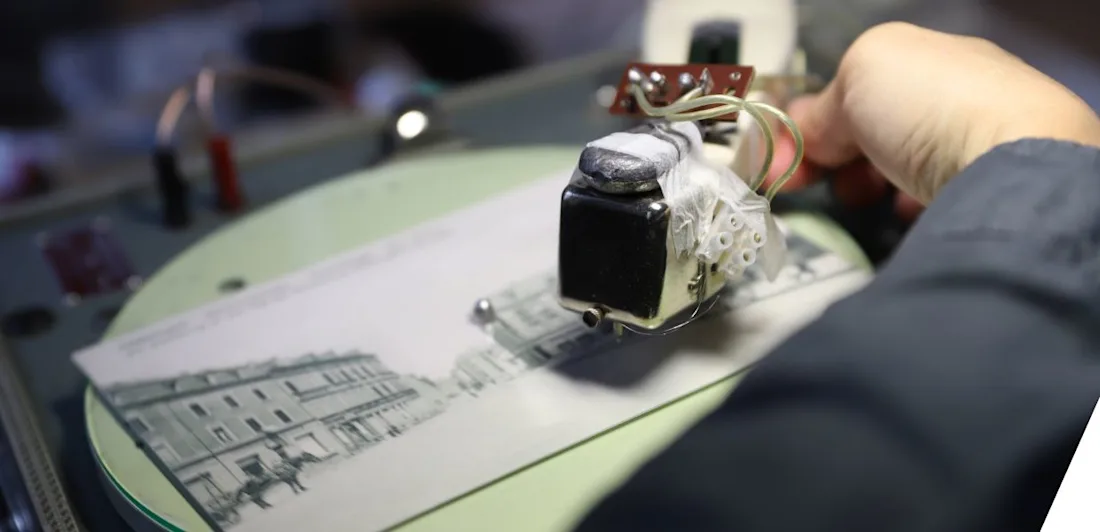
For the DEMA project, composer and researcher Aleksander Kolkowski explored early to mid-twentieth-century sound recording and amplification technologies and their histories of use, including an Edison 'Fireside' Phonograph (ca. 1909), HMV 2300H portable disc recorder (ca. 1948) and Wilcox-Gay Recordio 1C10 (ca. 1950). He also conducted a historical re-enactment with a Cartavox sound postcard recorder (ca. 1958), a short-lived sound recording device designed for making instantaneous voice recordings on a picture postcard. The special 'sound postcards' are playable on a turntable.
Watch the re-enactment of making a sound postcard recording with the Cartavox, recorded by Aleksander Kolkowski in the Contemporary History Lab, Esch-sur-Alzette, October 2020. Source: C2DH, University of Luxembourg. CC BY-NC-ND 4.0.
How 3D technologies enhanced the dataset
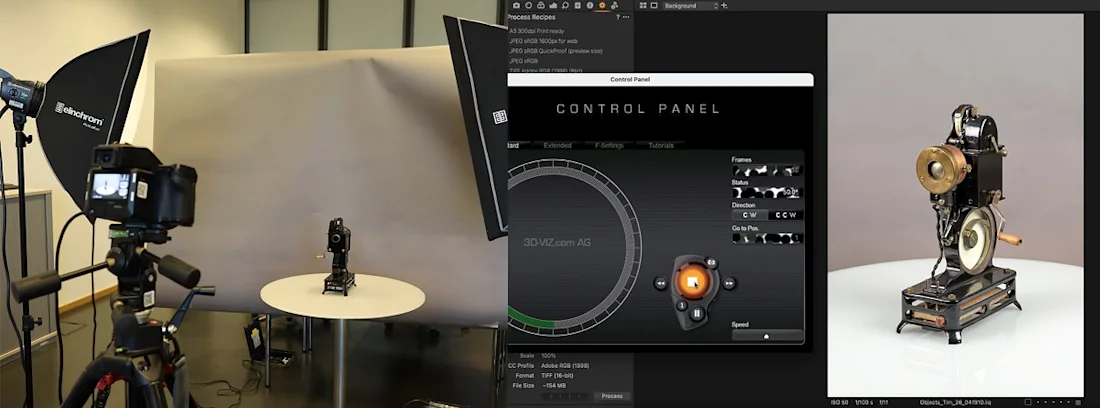
Central to the dataset are various 360-degree images and 3D objects. In total, 15 media historical objects were digitised this way. The captures were made in a professionally set-up studio at the Digital History Lab of the University of Luxembourg by means of a Phase One 360 photo camera and its Capture One processing software.
Immersive 3D app
To animate the 3D objects and contextualise them, an immersive 3D app was built by multimedia designer and researcher Theodoros Georgiakakis in the context of his research internship for CRAFTED.
The Virtual Viewing Experiences: Immersive Visualizations of Early-Twentieth-Century Home Cinema (VVE) project, a collaboration between the Open University of the Netherlands and Maastricht University, addressed the question of how to simulate hands-on media practices in a virtual environment using 3D-represented cultural heritage objects in such a way that the material characteristics of the objects and their usages become part of the virtual and immersive user experience.
Within the project, we used the 3D models of the Kinora and Pathé Baby 9.5mm film projector from the dataset. Watch the Video Demo.
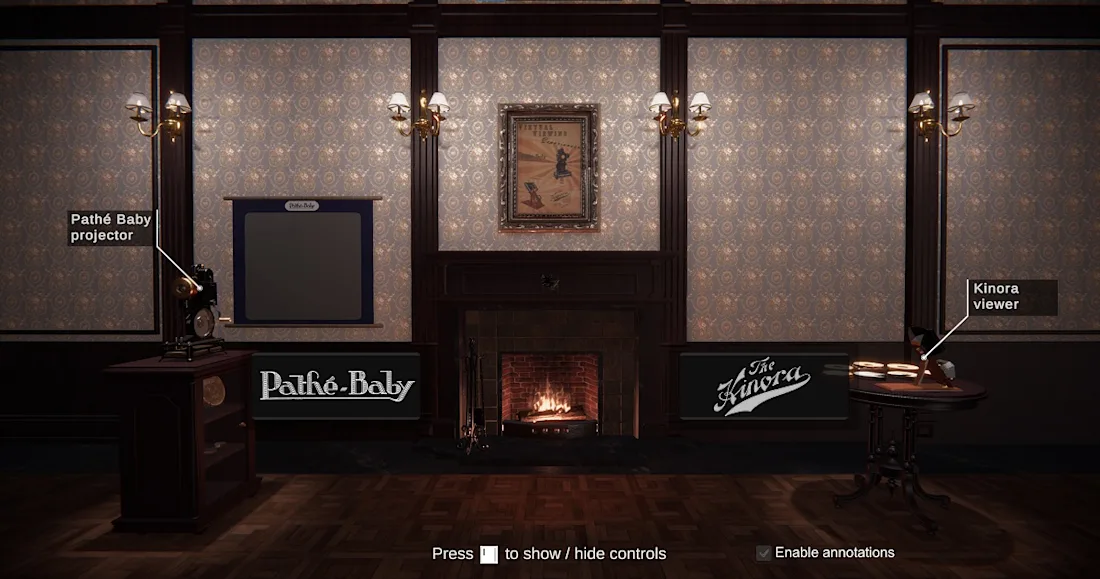
By simulating the functionalities, usages and viewing experiences of historical media technologies, the application is arguably positioned "in between" analogue and digital approaches in doing hands-on media history. A promising avenue to explore in future research on digital approaches in media heritage!
Find out more
Explore the CRAFTED-DEMA dataset and the inspiring stories produced by the CRAFTED project. Interested in finding out more about the opportunities which 3D digitisation offers for cultural heritage? Then find out about Twin It! 3D for Europe’s culture.
Lead image: Cartavox sound postcard recorder (ca. 1958) in use during a historical re-enactment by Aleksander Kolkowski. Source: C2DH / University of Luxembourg. CC BY-NC 4.0.