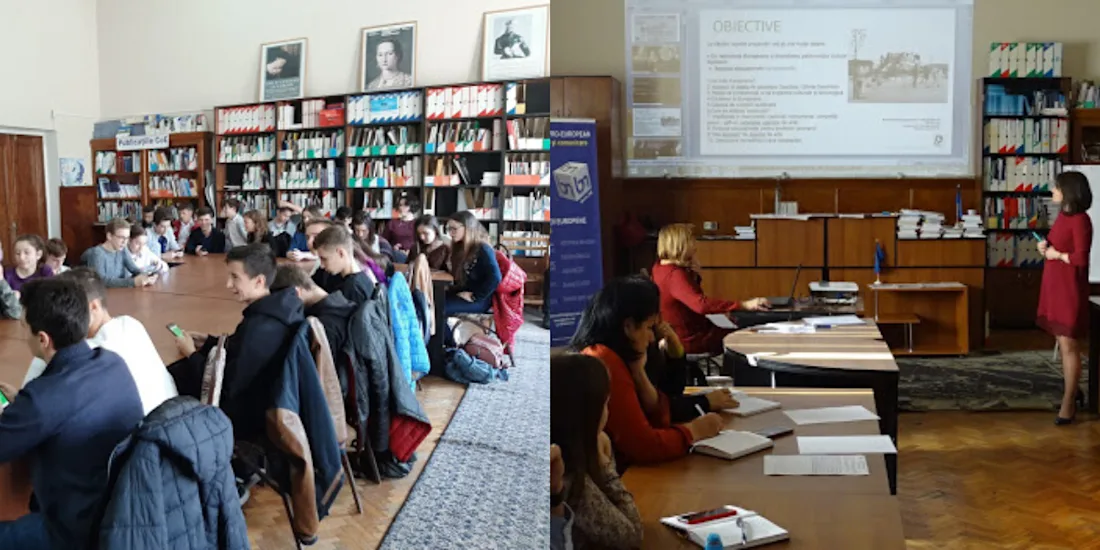
Bringing Europeana to students
The first session in the library introduced students to resources, tools, applications and games which promote national cultural heritage content. They learned how to find and attribute content via the Europeana portal, and about how the National Digital Library Moldavica integrates national cultural heritage into the platform. The knowledge and information they gained helped them to develop important skills around identifying, analysing and appreciating culture and history.
Inspiring teachers with Europeana
A second session with teachers from high school and university institutions in Chisinau highlighted a number of Europeana resources which are available to all educators. These include:
The Teaching with Europeana blog, a platform for teachers seeking innovative, and easily adjustable lesson plans for their programs
The Historiana portal which offers innovative learning activities and digital tools made by and for history educators throughout Europe
The Transcribathon platform, which encourages users to decipher, transcribe and annotate handwritten texts from Europeana
The Europeana in your classroom MOOC, which helps teachers integrate digital cultural heritage into their lessons and practice
The European Education Community, a network for professionals dealing with cultural heritage and learning at cultural and/or educational institutions.
The educators analysed and discussed different teaching-learning scenarios from the Teaching with Europeana blog and learned about the presence of a wide variety of scenarios already used in classrooms through the stories of implementation. At the end of the session, teachers received a portfolio with online resources they could use.
‘Vangoyourself’ with Europeana collections
During the activities, pupils and teachers got the chance to be creative through exercises from Vangoyourself. This tool allows users to recreate a painting or historic photo with friends, upload it and share it alongside the original, for others to enjoy.
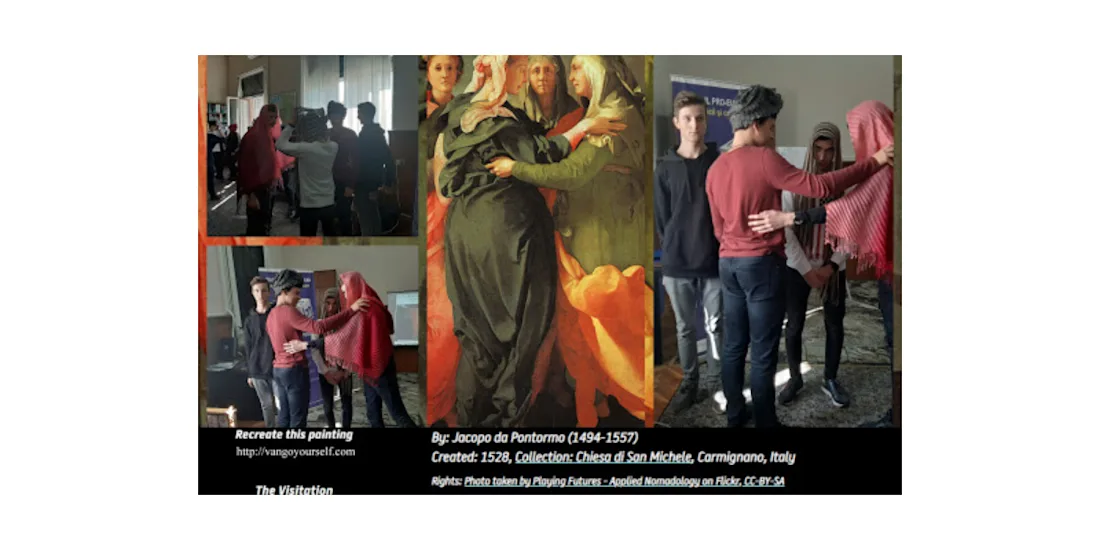
At the National Library, students were given 15 minutes to use the tool to reproduce an artwork, a challenge which all participants approached with enthusiasm and openness! The exercise encouraged them to think about artworks and their composition in new ways, as well as find out about how different paintings were produced. You can see some examples of the creative processes of the students and teachers here.
Future events
An interactive evaluation of these events allowed the library to assess the experience of the participants and the knowledge they gained as a result of the activities. This showed that the students and teachers enjoyed discovering and exploring digital Europeana heritage content through the activities and were inspired by their potential for further use in the educational process.
In 2020, the National Library intends to extend their initiative to promote the digital accessibility of heritage resources and opportunities offered by the Europeana platform. They will do this through a series of actions including educational-informative sessions for teachers in the framework of the annual meeting of the Teachers' Community of Moldova (META).
If you are interested in organising Europeana for Education events in your institution, please contact [email protected].
This event was initiated and organized by the National Library of the Republic of Moldova (Pro-European Center for Services and Communication; Digital Collections) in partnership with the Community of English language teachers from Moldova (META).
This post was updated on 16/08/2022 to update a link to the first session described in the post.