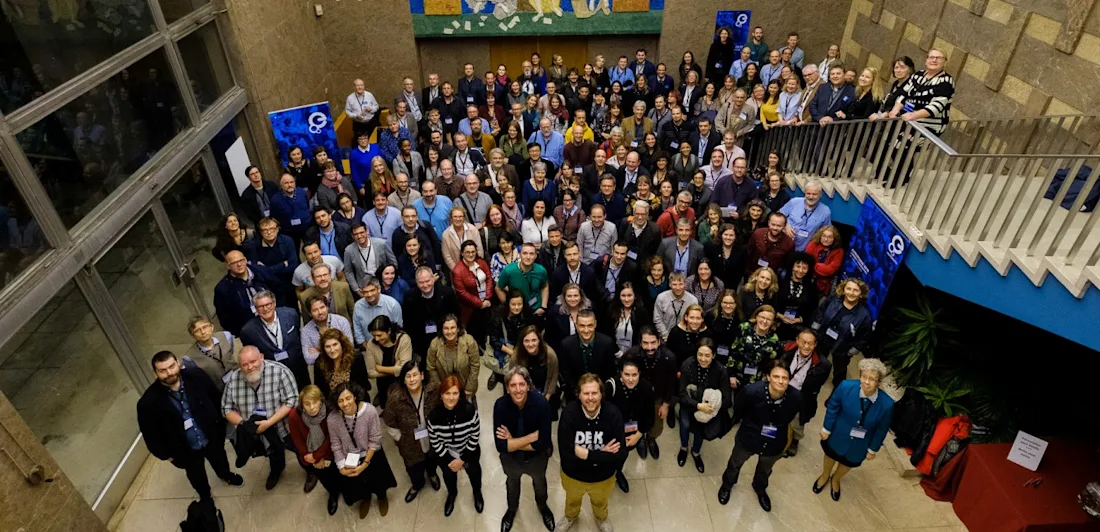
A packed and diverse programme
At Europeana 2019, there really was something for everyone. With all six specialist communities of the Europeana Network Association represented, plus the Europeana Aggregators' Forum, experts were on hand for any topic.
Keynote speakers, French engineer, researcher and entrepreneur at Ecole Polytechnique Federale de Lausanne, Frédéric Kaplan, and co-founder of the newly forming Museum for the United Nations – UN Live, Michael Peter Edson (by video) talked about how technology will change the future of cultural heritage, while workshops on topics such as impact, research and education showed us how we might start to deal with those changes today.
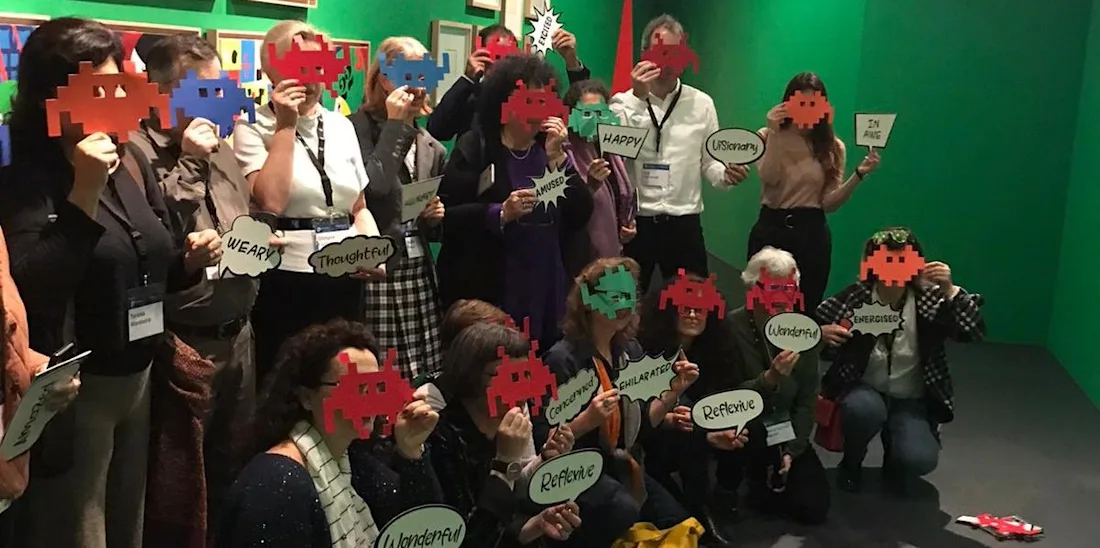
Workshops also brought us hands-on with culture with a digital invasion of the library's exhibitions showing us how social media and culture can come together to engage students, and an amazing group of singers creating new music setting off a discussion on copyright and rights statements.
For a feel of the audience's reactions, you can check out the following hashtags on Twitter: #Europeana2019 (used 450+ times during the conference), #EuropeanaCommunities (used nearly 200 times during the conference) and to see the results of the digital invasion, look at #feelingculture (used 50 times in the 30 minutes of the invasion!).
Elsewhere, Association members encouraged us to think about our collective responsibilities - to our members and to our planet. How can we make the Association as inclusive and diverse in membership as possible? And how can that membership drive respectful, ethical practices to help slow down the effects of climate change?
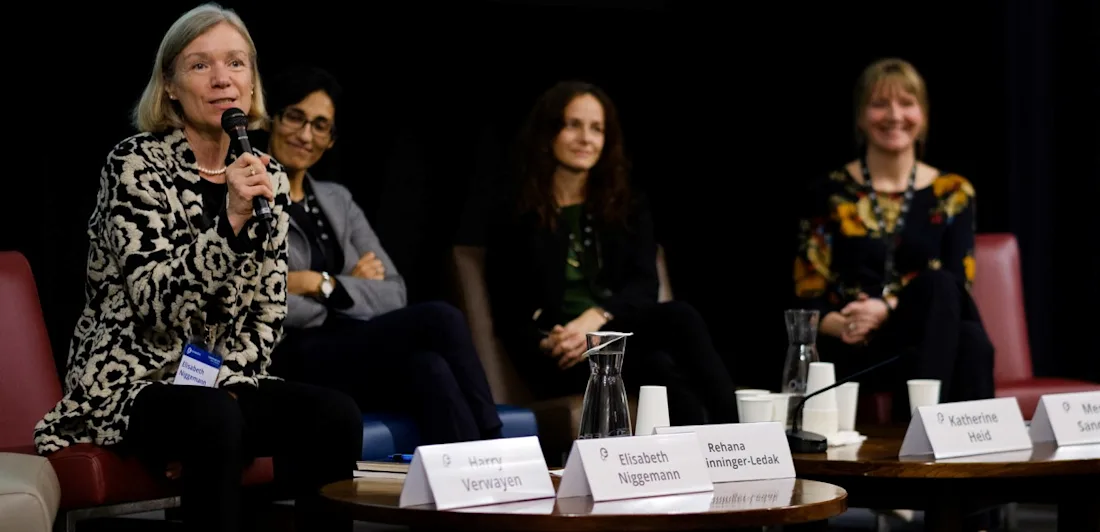
Speaking of diversity - the conference's 'no woman, no panel' philosophy was epitomised by a high-level panel session on the theme 'We transform the world with culture' featuring: Katherine Heid - Cabinet Member in charge of Culture and Youth for the European Economic and Social Committee; Elisabeth Niggeman - Director General of the German National Library and Chair of the Europeana Foundation Governing Board; Merete Sanderhoff - Curator / Senior Advisor of Digital Museum Practice at Statens Museum for Kunst; and Rehana Schwinninger-Ladak - Head of the unit 'Interactive Technologies, Digital for Culture and Education', European Commission. (Watch this from 5:11:40 on Thursday's recording).
Celebrating the work of the Association
In addition to the scheduled discussions, presentations and workshops, attendees had the chance to share their own projects and activities with a wide range of posters and a high-energy 'Pitch your project' session, or, as moderator Susan Hazan put it, a 'Europeana's Got Talent' session. (Watch it starting 8:24:15 on Thursday's recording.)
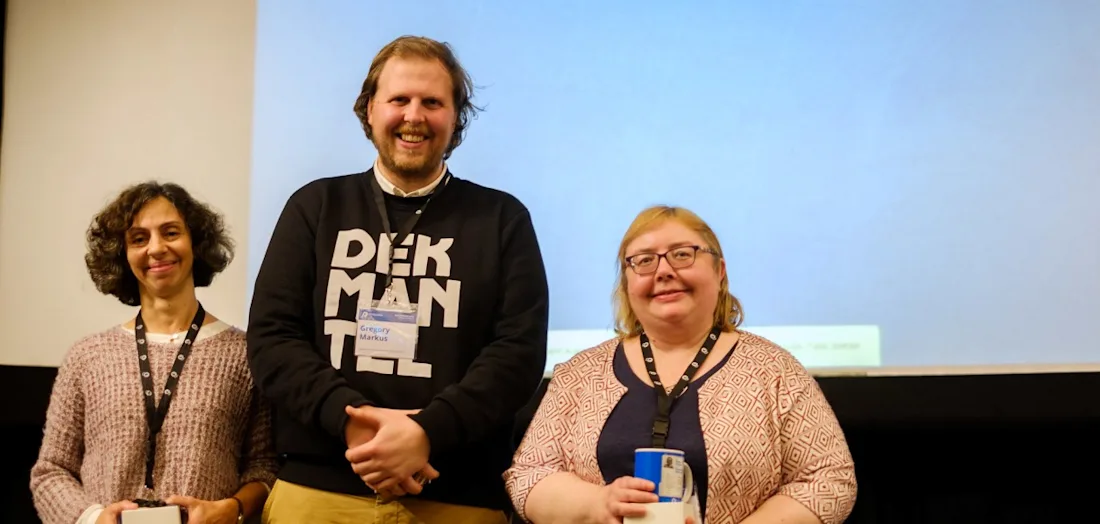
And there are always those people who work tirelessly but might not always shout about it - for them, we had our 'Unsung Heroes' awards. This year, these went to: Cosmina Berta - for her work with the Deutsche Digitalbibliothek and the Europeana Aggregators' Forum; Milena Dobreva - for her work with the Europeana Research community; Gregory Markus - for managing the EuropeanaTech community; and Maria Margarida Pedreiro Conceição Lopes - for her amazing collaboration putting on this event in her home library.
Workshopping with the Members Council
Ahead of the main conference, the Europeana Network Association Members Council got together to discuss the strategic priorities and involvement of the Association in the implementation of the new Europeana Strategy 2021-2025. Councillors also worked in groups on the topic of digital transformation in the cultural heritage sector: the discussion revolved around problems and solutions in building digital services, and how the Association and the Europeana Foundation could help implement these solutions. A large part of the meeting was then dedicated to the specialist communities and their progress, preparing priorities and activities for 2020, and ideas for interaction and cross-community connections. The Association budget update and various governance proposals were on the table for the final discussion.
Europeana Network Association 2019 General Assembly
The ENA Management Board kicked off Europeana 2019 with the 2019 General Assembly. Marco de Niet, Chair, gave the 265 attendees a warm welcome, introduced the session and reviewed the minutes of the 2018 meeting. Vice-chair Georgia Angelaki then presented the Association Annual Report 2019 and looked back on the main achievements and highlights of a year full of changes and challenges. One of the highlights was raising a strong voice for the relevance of the cultural heritage sector to climate change and making sure that this event would be as environmentally-friendly as possible. She also stressed the role of the communities as a driving force behind this year’s conference and pre-conference workshops.
Erwin Verbruggen then outlined the plans for next year based on the Association Activity Plan 2020. Frederik Truyen, Treasurer, provided an overview of the Association’s finances as described in the Financial Report 2018, gave a financial update for this year, and asked for approval of the Provisional Budget 2020. Finally, Sara Di Giorgio invited the present members to approve all these governance documents and formally launched the voting period. The audience provisionally accepted all the documents, and online voting subsequently took place between 27 November and 4 December 2019, with 86% of voting members approving the documents.