Find and refine results
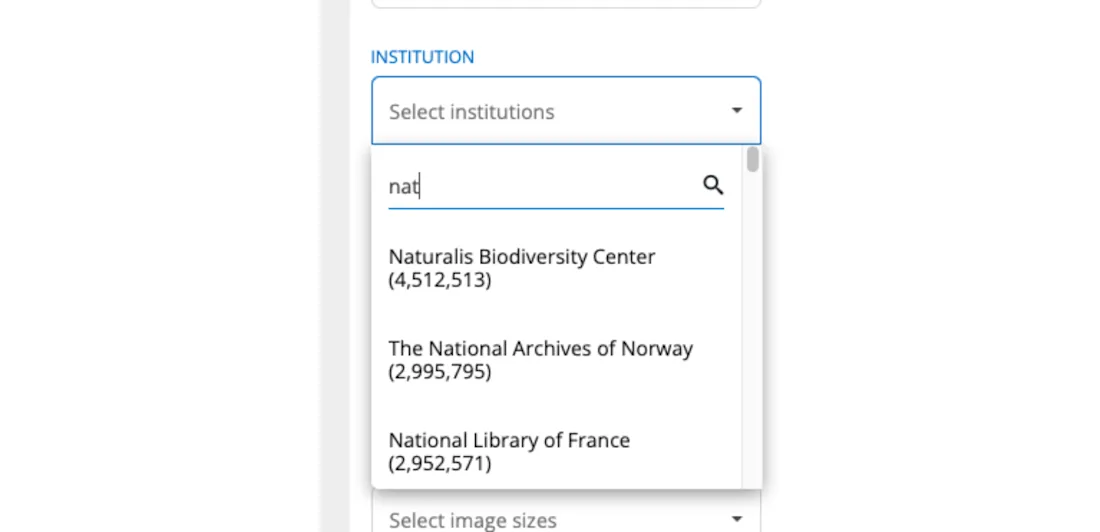
Earlier this year, we started improving the website’s search filters, making it easier for people to find and refine results. Now, we’ve made further improvements - an auto-suggest feature in the search filters helps you find the option you want. For example, if you’re looking for a specific ‘Institution’, you could start typing in the auto-suggest field. The search will return only the institutions which match what you’ve typed.
Collection suggestions
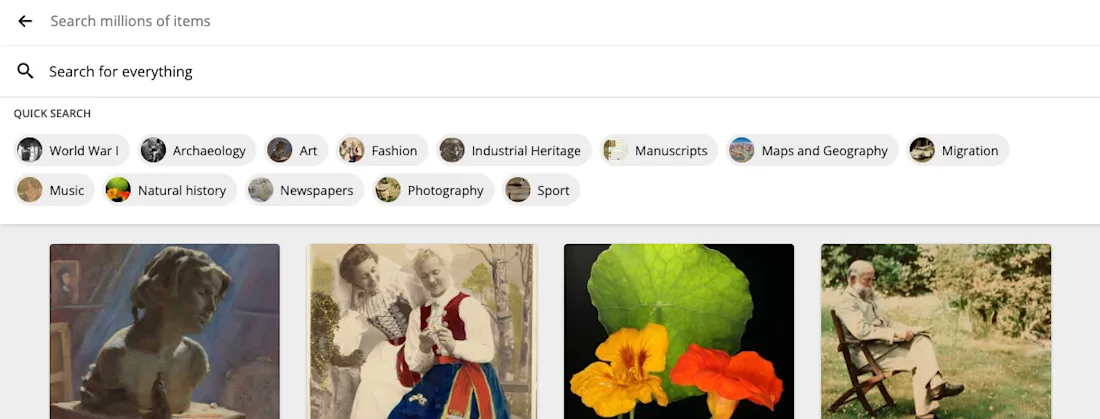
Next, we have added a list of collections to the main search bar guiding people to start their search within a particular context. The intention is to make it easier to find what you are looking for. For example, let’s say you’re looking for something related to sports. When you open the search bar, instead of typing in ‘sports’, you can click on the button that takes you to sports-related content directly.
Discover stories
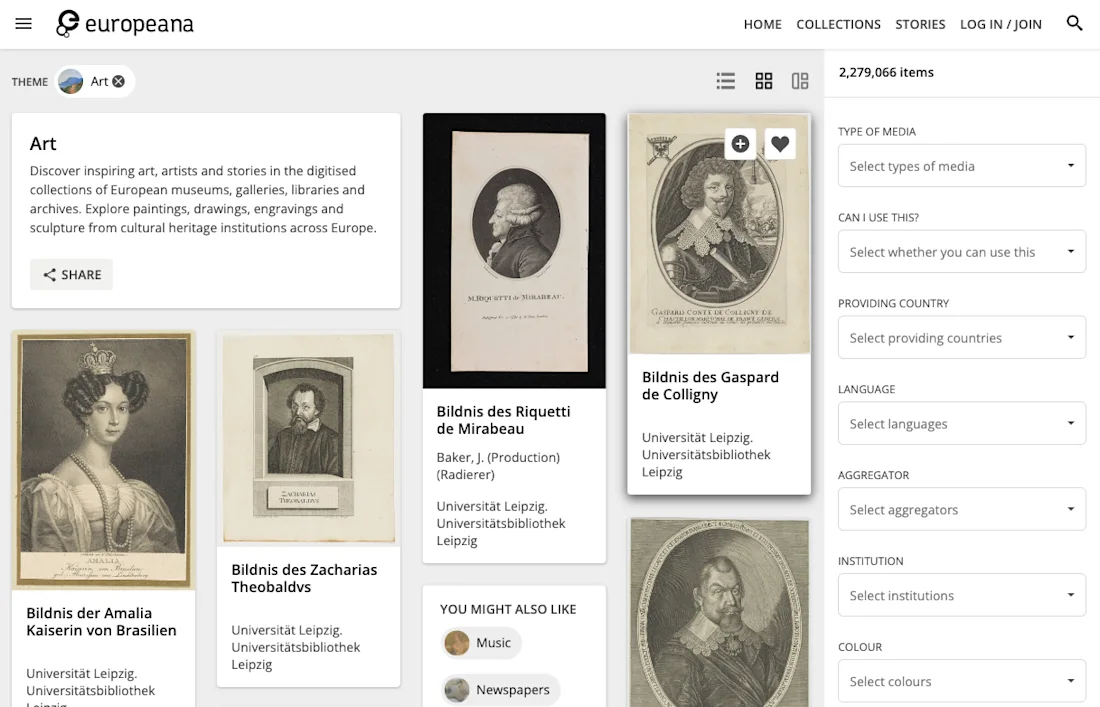
It is now much easier to discover ‘stories’ (blogs, galleries, exhibitions). For example, if you’re looking at the ‘art’ collection, you’ll find stories related to art just after the search results. Linking these different kinds of content invites people to explore the richness of cultural heritage.
You can now also search for stories within a collection (content organised by topic, century or organisation - find links to these on the Collections page). Let’s take the art collection as an example again. When you search for ‘Frida Kahlo’ within this collection, you’ll discover both search results for ‘Frida Kahlo’, and stories related to ‘Frida Kahlo’.
And it works the other way around too! You can find links to relevant collections on exhibition pages and blog posts.
Updated collection page design
We have also updated the layout of the collection pages. All essential information, such as the collection title and description, is now more prominent, including the links to related collections. Plus, a ‘Share’ option beneath the description let’s you easily share these fascinating pages on social media.
User research and coming up
We are committed to making digital cultural heritage accessible to all - we want to develop products that can be used by everyone, and that are based on research. Recently, we’ve been working on making the Europeana website more accessible to people with visual impairments - read our news post by Celina Bebenek.
User research is also helping us to shape the design of the homepage - which will soon look a little different! The redesign will make exploring and browsing the website easier. We are working on the changes so keep an eye out for more news!
Interested in helping us with our research? Join our User Research Group by sending an email to [Dasha Moskalenko](mailto: [email protected]).
This quarter in numbers
From 1 April to 20 June 2022, the Europeana website recorded just over one million visits, around 2.8 million page views, and about 1.9 million unique page views. In addition, we recorded around 204,000 unique item downloads.
The three most-liked items were Brandsläckare (provided by the Swedish Air Force Museum), Ukmergės RKB gimimo metrikų knyga (provided by the Lithuanian state historical archives) and Orient Express - A Bár egy részlete (provided by Magyar Kereskedelmi és Vendéglátóipari Múzeum in Budapest).