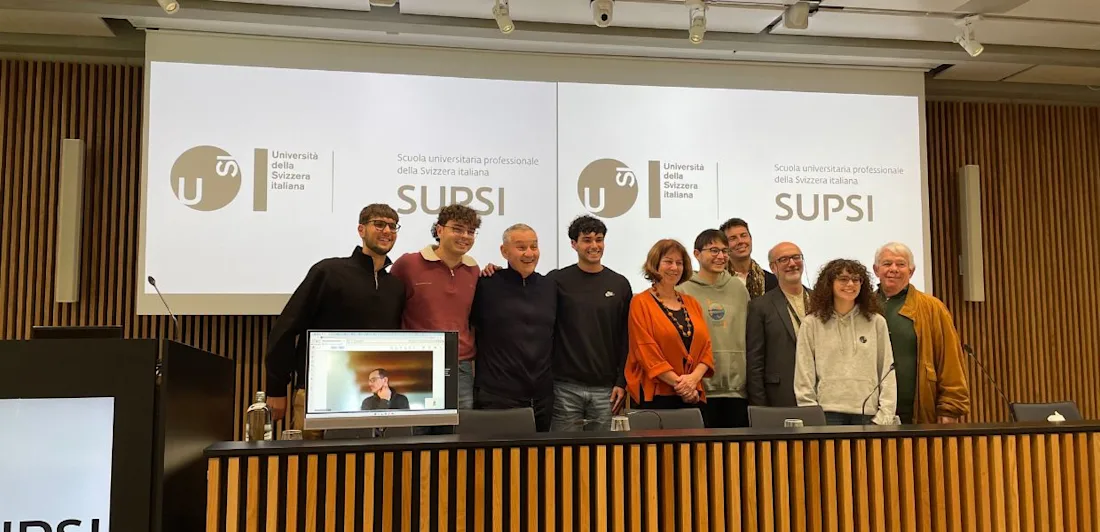
The Beyond Borders Hackathon, an exciting day of creativity and reflections took place in Lugano (Switzerland) on 25 October 2025, co-organised with Europeana, Photoconsortium, SECreTour project, UNESCO Chair of the Università della Svizzera Italiana in ICT to develop and promote sustainable tourism in world heritage sites and UNESCO Chair of the Università di Genova in Anthropology of Health, Biosphere and Healing Systems. The focus of the event was on the role of open access collections in digital storytelling to support heritage tourism (natural, cultural and intangible). The event supports the priorities for the common European data space for cultural heritage, fostering access by stakeholder communities and reuse of digital cultural content published on the Europeana website, as well as establishing and nurturing synergies between the cultural heritage sector and the tourism sector.
Engaging students and creative minds in reusing digital cultural collections in 2D and 3D
The Beyond Borders Hackathon invited university students and young digital creators interested in digital cultural heritage, social science and humanities, cultural promotion and sustainable tourism to deliver creative proposals using the collections available on the Europeana website, inspired by SECreTour’s mission to promote sustainable, engaging and creative tourism as a driver for a better future in rural and remote areas.
The general theme of the Hackathon was ‘Exploring Insubria, and other cultural corridors through digital heritage collections’. The event opened with talks on digital transformation in cultural heritage and the use of 2D and 3D digital resources to promote tourism by Antonella Fresa (Photoconsortium) and Insubria’s cross-border heritage by Professor Adine Gavazzi (USI, UNIGE).
Participants then explored Europeana’s open cultural datasets to create digital storytelling projects on Insubria’s geocultural heritage, guided by mentors Fiona Mowat (Europeana Foundation) and Matevž Straus (Arctur).
The participants could access the entire Europeana database of records for their projects, either through the website or Europeana API. To provide some inspiration and guidance, several curated collections were specifically showcased to the students, such as the travel and tourism photography collections aggregated in the context of the INCULTUM and SECreTOUR projects on sustainable and local tourism from various European sites; a selection of photographs from the religious Easter processions in Trapani (Italy) and in Mendrisio (Switzerland); and three curated batches specifically focused on tangible and intangible heritage of Monte San Giorgio (Switzerland).
Promoting local heritage for mindful and sustainable tourism in lesser known areas
The student teams worked all day on their creative projects, and presented them to the jury, composed of David Iglesias Franch (CRDI Ajuntament de Girona and Photoconsortium President), Alexandra Bitusikova (Matej Bel University), Anna Siri (UNESCO Chair).
The two winning teams presented the heritage of Monte San Giorgio engaging new touristic audiences with digital cultural materials.
One team (Auréliane, Edoardo, Filippo) developed a concept with several aspects: an immersive room in a nearby shopping mall to entice shoppers to Monte San Giorgio, made more appealing by brand collaborations with companies in the mall. They also designed a trail for children which highlighted key heritage features like fossils and natural plants of the mountainside - using digital heritage to bring the natural landscape to life. A physical element of touching rocks and plants meant that children would be immersed in their surroundings and not solely in the technological or digital.
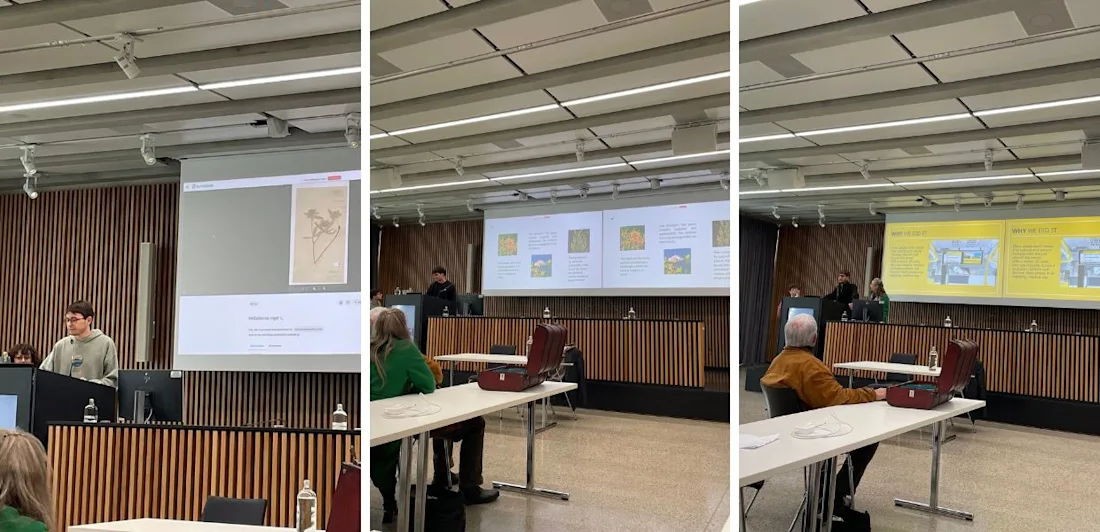
The other team (Daniele, Mattia) presented the cultural heritage of Monte San Giorgio for a young adult audience who like to scroll through images. Landmarks were displayed on a map in a prototype app, as well as metadata and information about heritage items. It also allowed users to interact with the data and share, comment and like the cultural materials. The app could also be advertised at transport stops and on the transport itself.
The value of hackathons, Europeana data - and how to get involved
Hackathons like the one organised in Lugano offer valuable opportunities for students to access data and work with data from Europeana.eu, experiment with different themes, get hands-on experience of working with the Europeana APIs, and to collaborate with people in different fields.
If you would like to work on your own innovative projects using cultural heritage data, we invite you to explore the Europeana APIs. If you want to do a hackathon with Europeana data, or get support from Europeana to organise one, get in touch with [email protected].