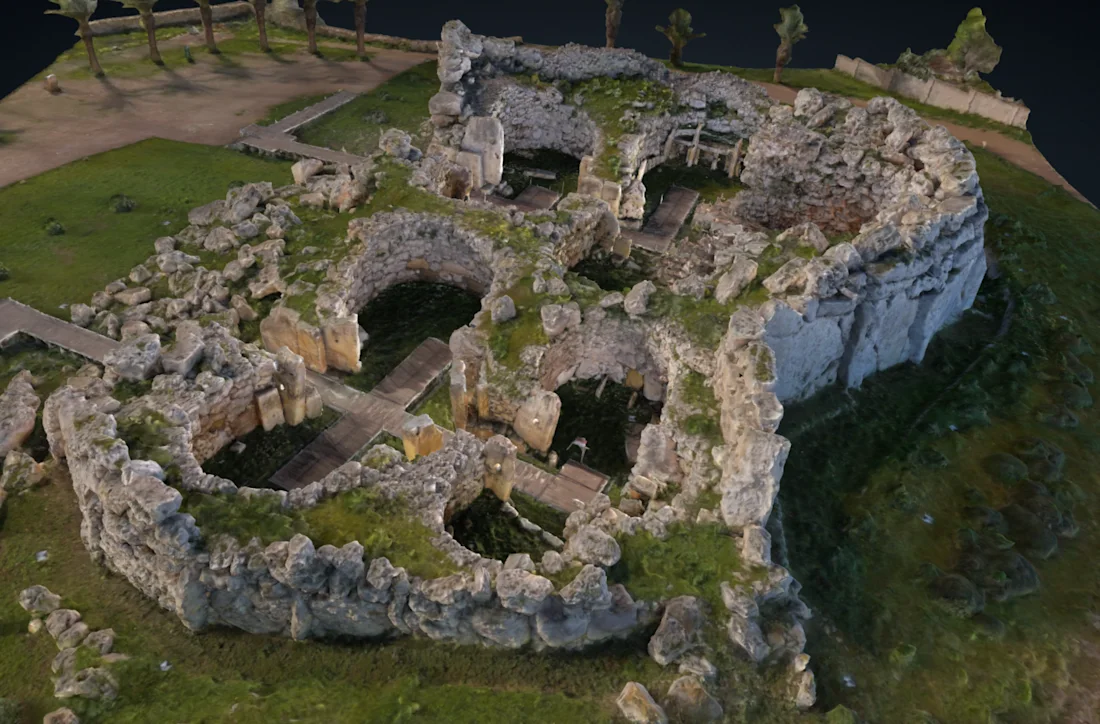
Malta is excited to participate once again in Twin it! 3D for Europe’s Culture – now in its second phase: Twin it! Part II. Twin it! supports European Union member states to share 3D models of significant heritage objects and architecture to the common European data space for cultural heritage. As an official Europeana aggregator, Heritage Malta has submitted to the campaign one of Malta’s most internationally recognised heritage sites, the Ġgantija megalithic complex on the island of Gozo. The model not only provides access and reuse opportunities to this historic site through Europeana.eu, but also showcases the cutting-edge work of Heritage Malta in digitising and interpreting Malta’s cultural heritage.
Introducing Ġgantija
The neolithic megalithic complex of Ġgantija on the Maltese island of Gozo is comprised of massive limestone structures that date to between 3800 and 2000 BCE, making this one of the world’s oldest freestanding structures. Inscribed on the UNESCO World Heritage Site list in 1980, the structure is located within Heritage Malta’s Ġgantija Archaeological Park. The protected site features an interpretation centre which contextualises the site within the broader Gozitan landscape and with other similar megaliths built across the islands.
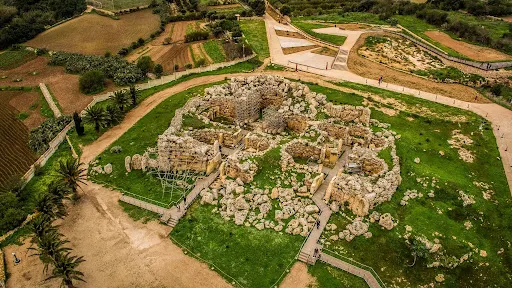
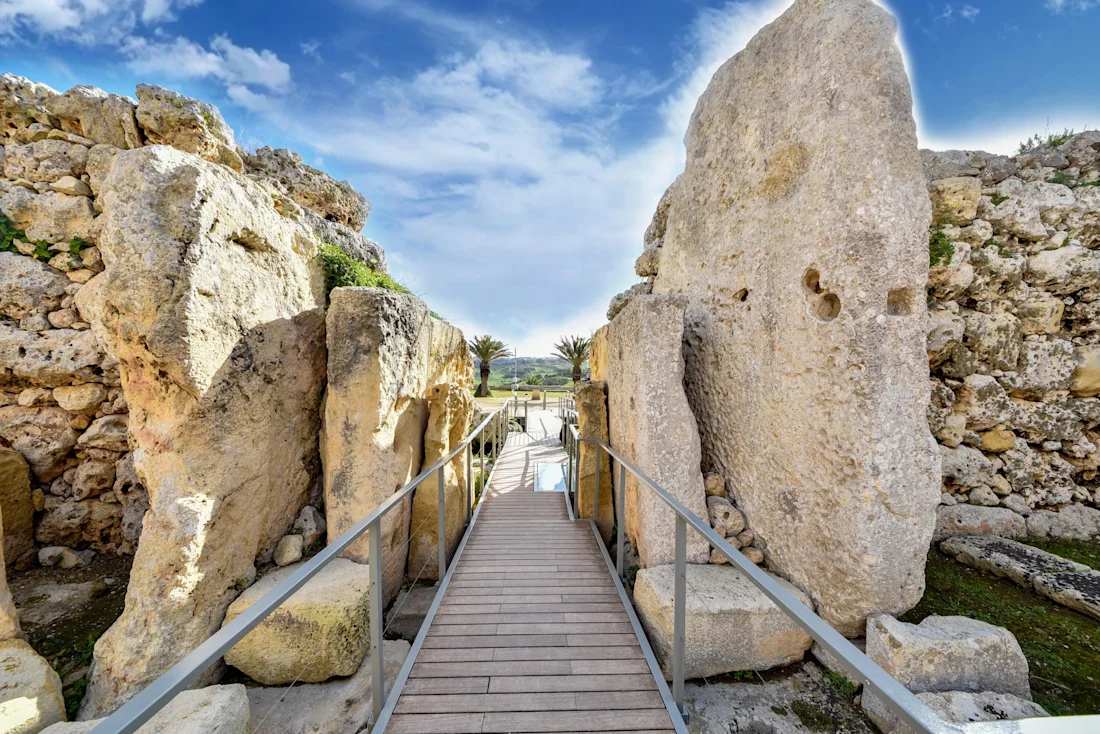
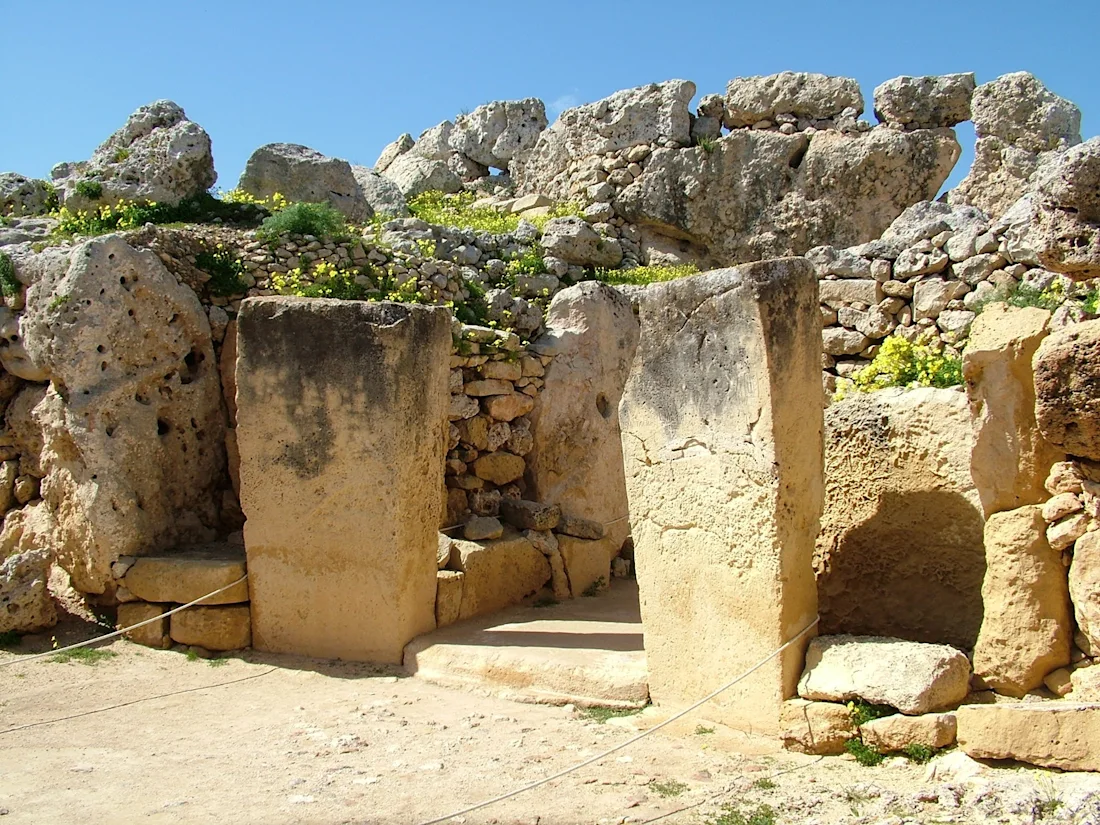
Archaeological evidence suggests communal, possibly ritual or social functions of the site, reflecting the Neolithic society’s organisation, engineering skill and symbolic or cosmological practices. The neolithic builders made use of both locally sourced globigerina and coralline limestone. The hard-wearing coralline limestone is used extensively at Ġgantija, while the softer globigerina limestone is reserved for inner furnishings, such as doorways, altars and decorative slabs. The site’s two structures have separate entrances and are enclosed within a common outer megalithic wall. Each unit consists of a number of apses flanking a central corridor. Two plaster fragments with red ochre, now on display at the Interpretation Centre, suggest that the internal walls were at one time plastered and painted over.
The importance of digitising this site
Throughout 2026, Ġgantija has been undergoing an extensive digitisation programme to support the ongoing conservation responsibilities that Heritage Malta is entrusted with. Digital scans have been created of parts of the site in the past, but this will be the most detailed dataset produced so far. Heritage Malta’s Digitisation Unit is undertaking a comprehensive multi-modal digitisation process involving drone photogrammetry and Lidar, alongside scientific readings of stone density and deterioration.
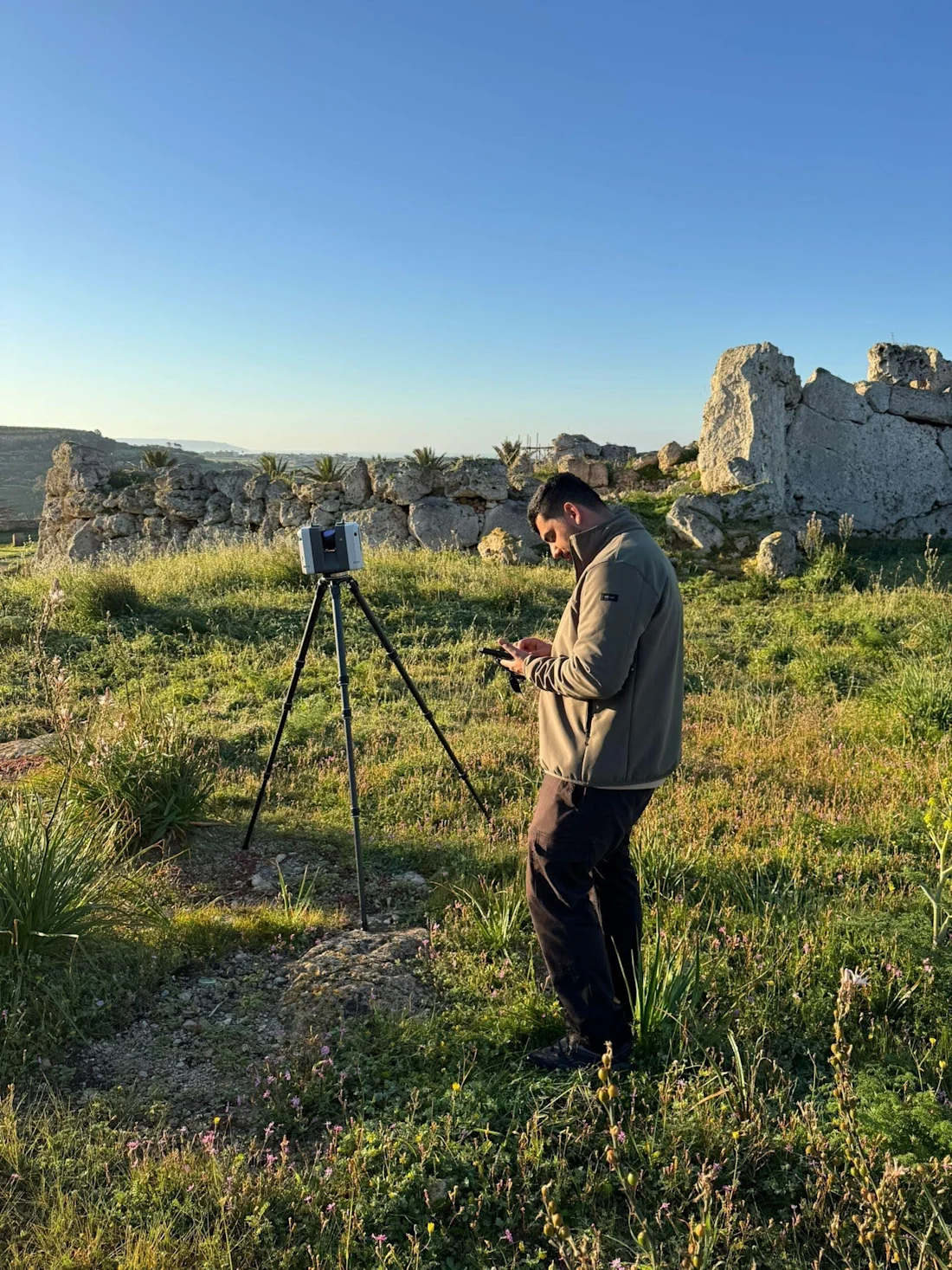
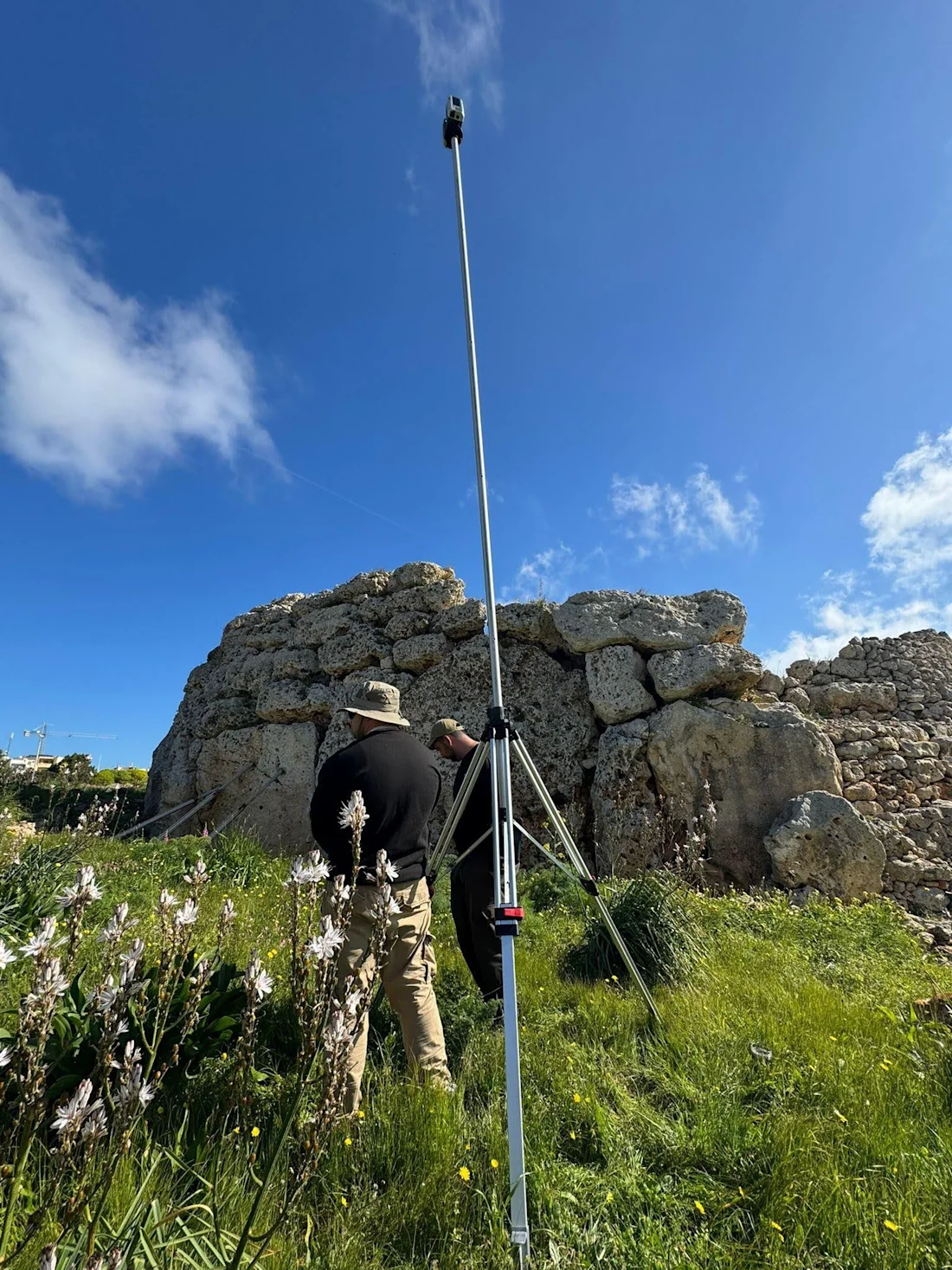
The Ġgantija digitisation project is being carried out for several reasons. One aspect is an ongoing technical research project, focusing on the study of one façade wall that is currently supported by scaffolding. The resulting model will enable the production of accurate cross-sections and orthographic projections of the façade, while also serving as a spatial container for mapping and integrating related datasets. This model documents the current condition of Ġgantija, providing a high-quality 3D model and point cloud that can support future research, conservation initiatives, and public dissemination and interpretation projects.
Alongside the generation of high‑resolution 3D outputs, the Ġgantija digitisation programme places strong emphasis on the documentation of paradata, the contextual information describing how, why and under what conditions the digital data was produced. This includes details of acquisition methods, instruments, resolution choices, environmental conditions, data processing workflows and interpretative decisions made throughout the digitisation process.
This approach is closely aligned with the principles outlined in the VIGIE 2020/654 ‘Study on Quality in 3D Digitisation of Tangible Cultural Heritage’, which highlights the critical role of transparency, documentation and traceability in large‑scale cultural heritage digitisation. Recording paradata ensures that digital representations are not treated as neutral or static outputs, but as knowledge constructions that can be evaluated, reused, and reinterpreted over time.
Within the Ġgantija Memory Twin framework, paradata forms a foundational layer, enabling future researchers, conservators, and creative practitioners to understand both the digital model and the processes that shaped it, supporting long‑term reuse, credibility and scholarly integrity.
However, it is important to ensure that we do not limit ourselves to solely technical applications of such technology. Heritage Malta’s responsibility is not just to protect the heritage entrusted to us, but to interpret and make it available for educational uses.
The Ġgantija memory twin
As part of this work, the digital model of Ġgantija is being developed within the framework of a Memory Twin. Building upon the concept of a Digital Twin, the Memory Twin extends beyond geometric documentation to incorporate historical, archaeological, scientific and interpretative knowledge layers linked directly to the digital model.
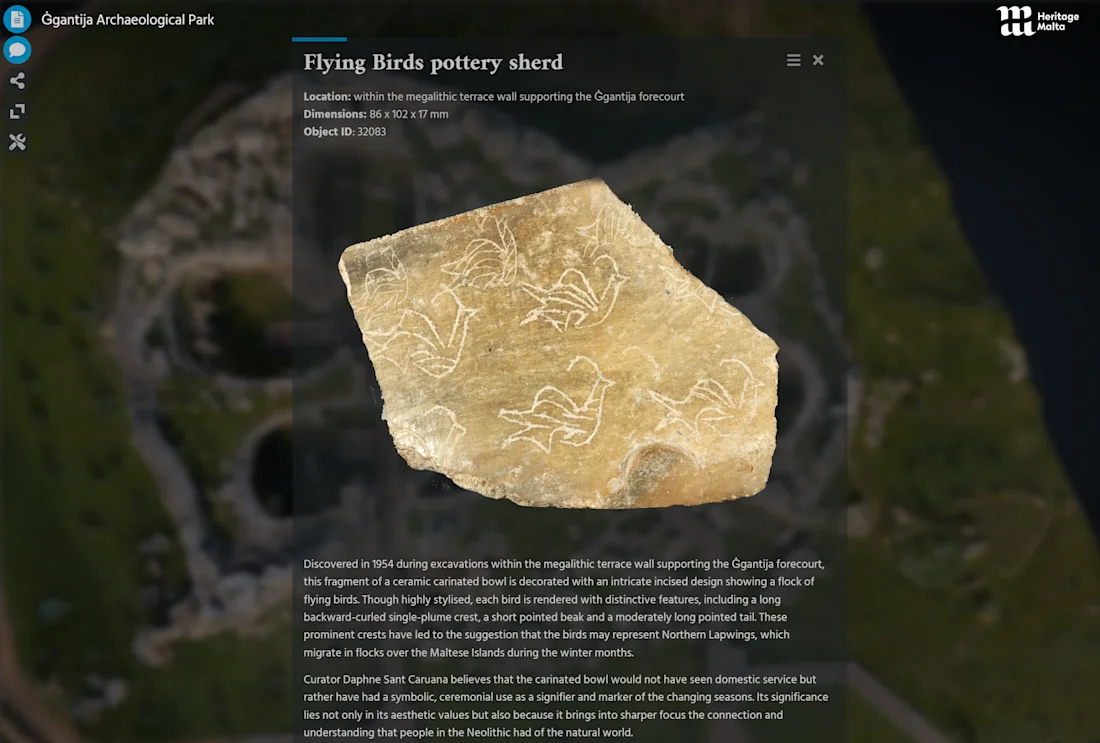
For Ġgantija, this means that the 3D representation is not simply a visual surrogate of the monument but a structured knowledge environment. Archaeological interpretations, material studies, conservation records, historical sources and interpretative narratives can be connected to specific architectural features, enabling users to explore the site through spatially anchored knowledge.
This approach allows Ġgantija’s deep temporal complexity to be represented more faithfully, acknowledging that heritage is not static but continuously reinterpreted through research, conservation practice, and public engagement. The Memory Twin framework also supports transparency and reuse, making it possible for scholars, educators, creatives and technologists to access both the model and its contextual data through platforms such as Europeana.eu and Heritage Malta’s eMuseum platform.
In this way, Ġgantija’s Memory Twin becomes a living digital archive, one that preserves not only the monument itself, but also the knowledge, decisions, and interpretations that shape our understanding of it over time. This paradata‑driven approach supports reproducibility, cross‑project comparability, and long‑term interoperability within the common European data space for cultural heritage.
What next for Ġgantija?
Despite having existed for over 5,600 years, Ġgantija is at considerable increasing risk from the effects of the climate crisis and tourism. As part of the Horizon Europe project STECCI, Heritage Malta is applying advanced digitisation and non-destructive techniques to assess how climate change is affecting this monument. Whilst Heritage Malta is at the forefront of techniques to protect the site from these physical effects, digitisation enables us to support these efforts by increasing awareness of these impacts and provide access to the site for a multitude of educational and creative uses in a digital domain.
Heritage Malta will be helping to spread the possibilities enabled through digitisation by participating in the Hackit!4EU hackathon in Limassol, Cyprus, using the Ġgantija 3D model as the basis of a digital transformation activity. Exciting collaborative activities like this encourage the creative reuse of 3D assets from across Europe, bringing together educators, heritage and tourism professionals, students, creatives, and researchers in a space of co-production in the wider spirit of Europeana. Ultimately this type of collaboration benefits our visitors, enabling us to offer more varied and valuable experiences.
Get involved
Readers can find out more about Twin it! on the data space website and follow all the news about the campaign’s final events.